
30 Horsepower Tohatsu Four Stroke Outboards MFS30A-MFS30B-MFS30C-MFS30D
Tohatsu 30 Horsepower Outboard and Colorado River & Trail Expeditions
2024 will mark the 23rd year Colorado River & Trail Expeditions has used Tohatsu 30 horsepower outboard engines on their Grand Canyon motorized expeditions. During this 20+ year period the 30 horsepower Tohatsu outboard has seen 4 different models. The MFS30A debuted in 2001. The MFS 30B came out in 2005, MFS30C in 2015, and most recently the MFS30D was released in 2022. Colorado River & Trail Expeditions uses the long shaft tiller models on our
Grand Canyon Rafting trips.
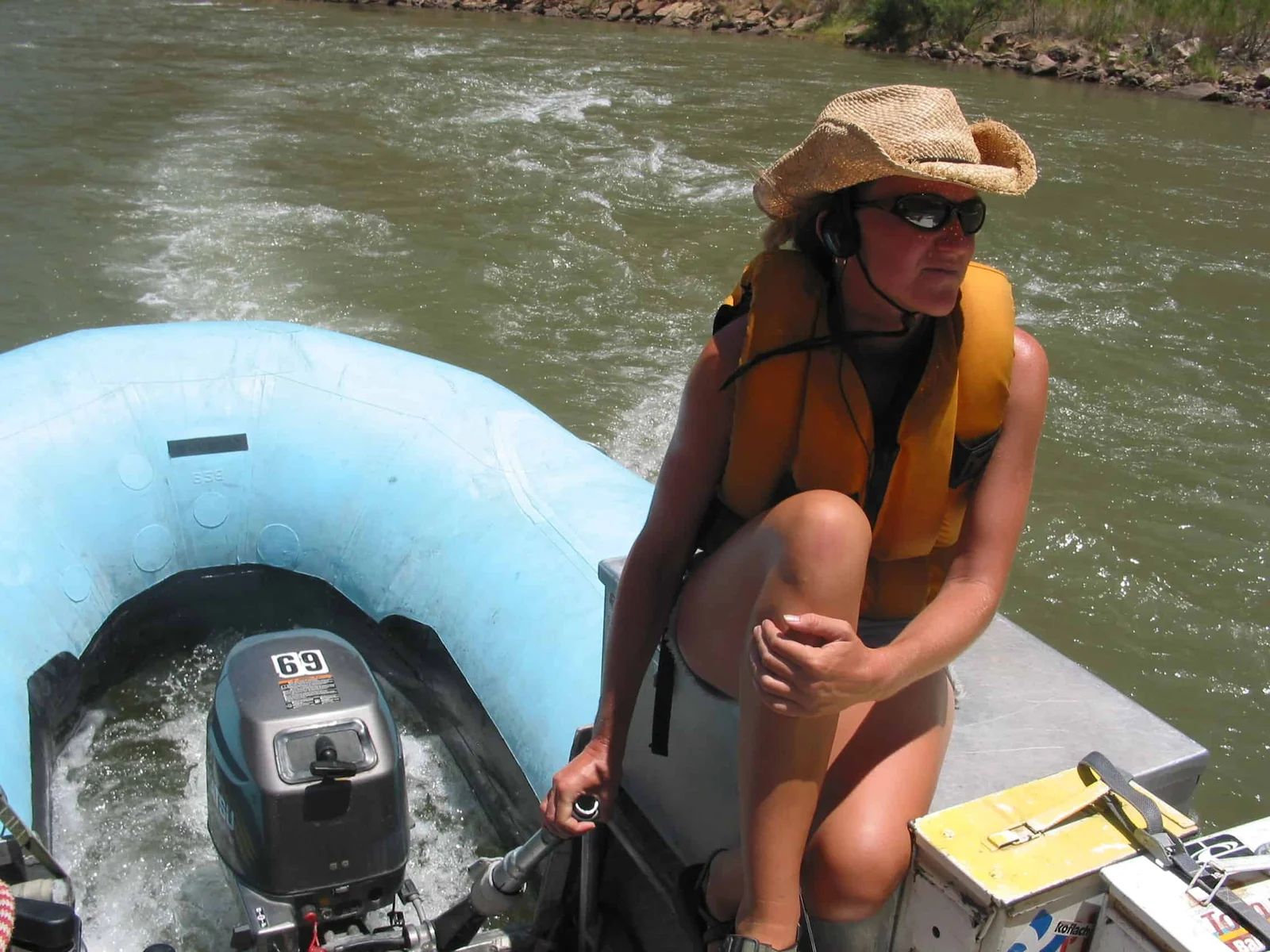
MFS30A Tohatsu on Lake Mead Run-Out.
Tohatsu MFS 30A(2001-2005)
The debut of the 30 horsepower four stroke Tohatsu came in 2001. The MFS30A is dark grey in color. The engine has 3 carburetors and 3 cylinders. The carburetors can be balanced with an electronic vacuum gauge from Tohatsu. The idle can be adjusted by turning in a screw in or out on the bottom carburetor. This is a really nice engine that opened the eyes of a lot of the other manufacturers at the time.
At Colorado River & Trail Expeditions, we first tried the 30 Horsepower Honda four stroke engine when Grand Canyon National Park began requiring the quieter and cleaner four strokes. After a handful of years running the Hondas, we made the decision to switch to the Tohatsus. We did this because they gave us better performance in the whitewater of the Grand Canyon. Most notably less problems with the engines killing in the rapids when we tilted them to avoid rocks in the river channels. The 30A has a rev limiter of 6500 rpms, and a 2800 max rpm when the low oil sensor is triggered. The tiller/long shaft MFS30A engine weighs just under 160 pounds.
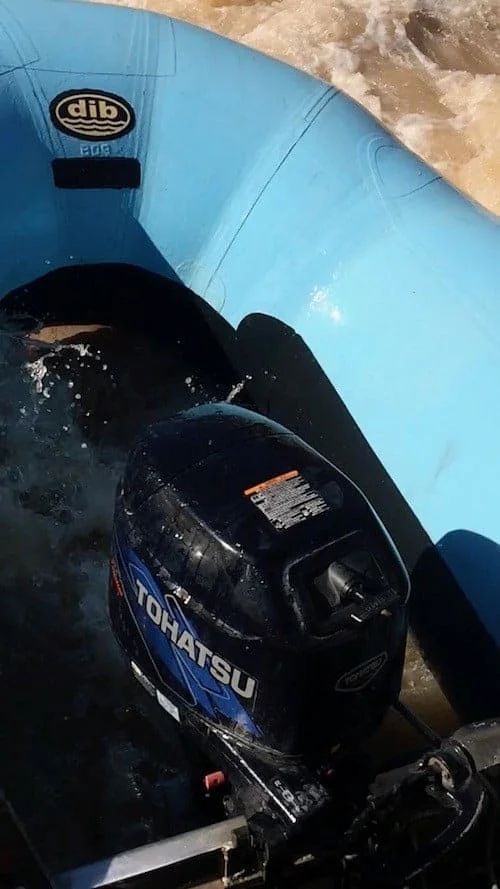
Tohatsu Outboard Engine on raft.
Tohatsu MFS 30B(2005-2014)
The MFS30B model of the four stroke 30 horsepower Tohatsu was introduced in 2005. This engine was the first EFI(Electronic Fuel Injection) four-stroke 30 that could be started manually without an external battery. The MFS30B was a joint venture with Mercury Marine and is basically the same engine as the 30 horsepower Mercury Outboard. The cowl and transom brackets differ, but the lower unit and the powerhead are the same.
The MFS30B added slightly larger piston displacement than the MFS30A model(+7%). While the rev limiter and max rpm due to low oil pressure stayed the same as the MFS3oA(6500 rpms/2800 rpms). There is no idol adjustment on the MFS30B. The fuel system has a low pressure and high pressure fuel pump to deliver the fuel to the cylinders. The spark plugs and injectors are easy to get to in the event they need to be changed. The long shaft MFS30B weighs 161 pounds.
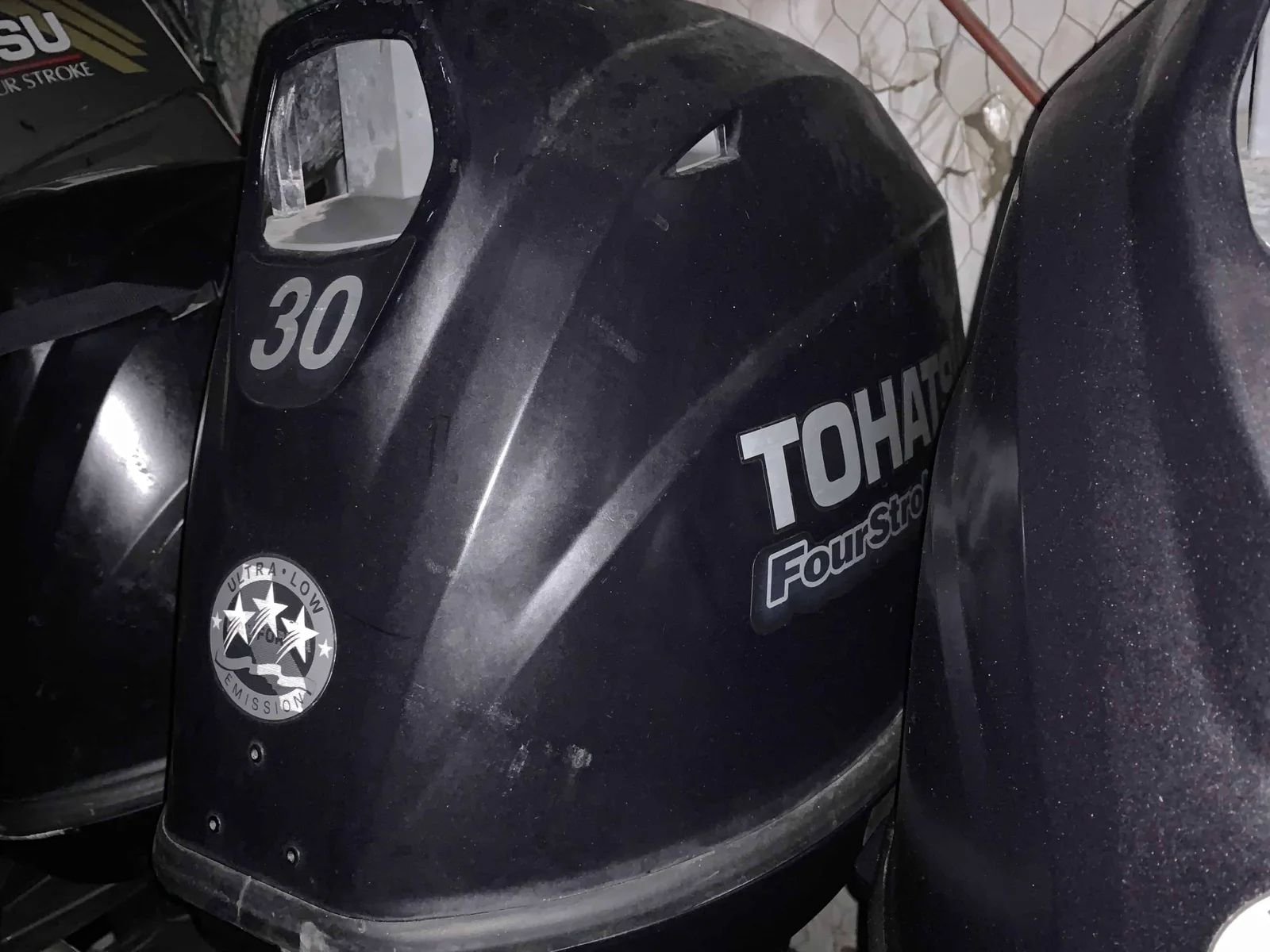
“Darth Vader” look of MFS30C Tohatsu Outboard Engine.
Tohatsu MFS30C(2015-2022)
The MFS30C update in 2015 included a new look with different cowlings and some changes to the lower unit. Our guides like to call it the “Darth Vader,” because of the cowlings. The new lower unit utilizes a lower gear ratio(2.17:1 previously 1.92:1). Lower gear ratio gives better low end torque, as well as the ability to turn a higher pitch prop, resulting in better top end performance. The new cowlings allow more room to work on the engine. The bottom cowling utilizes a better hook to clip to the top cowl. Overall, the MFS30C is very similar to the MFS30B, but looks different because of the cowlings. Our Grand Canyon rafting guides love the MFS30C. Tohatsu is a great company with its United States headquarters in Carrolton, Texas. To learn more about Tohatsu be sure to read our blog about the History of Tohatsu Outboards.
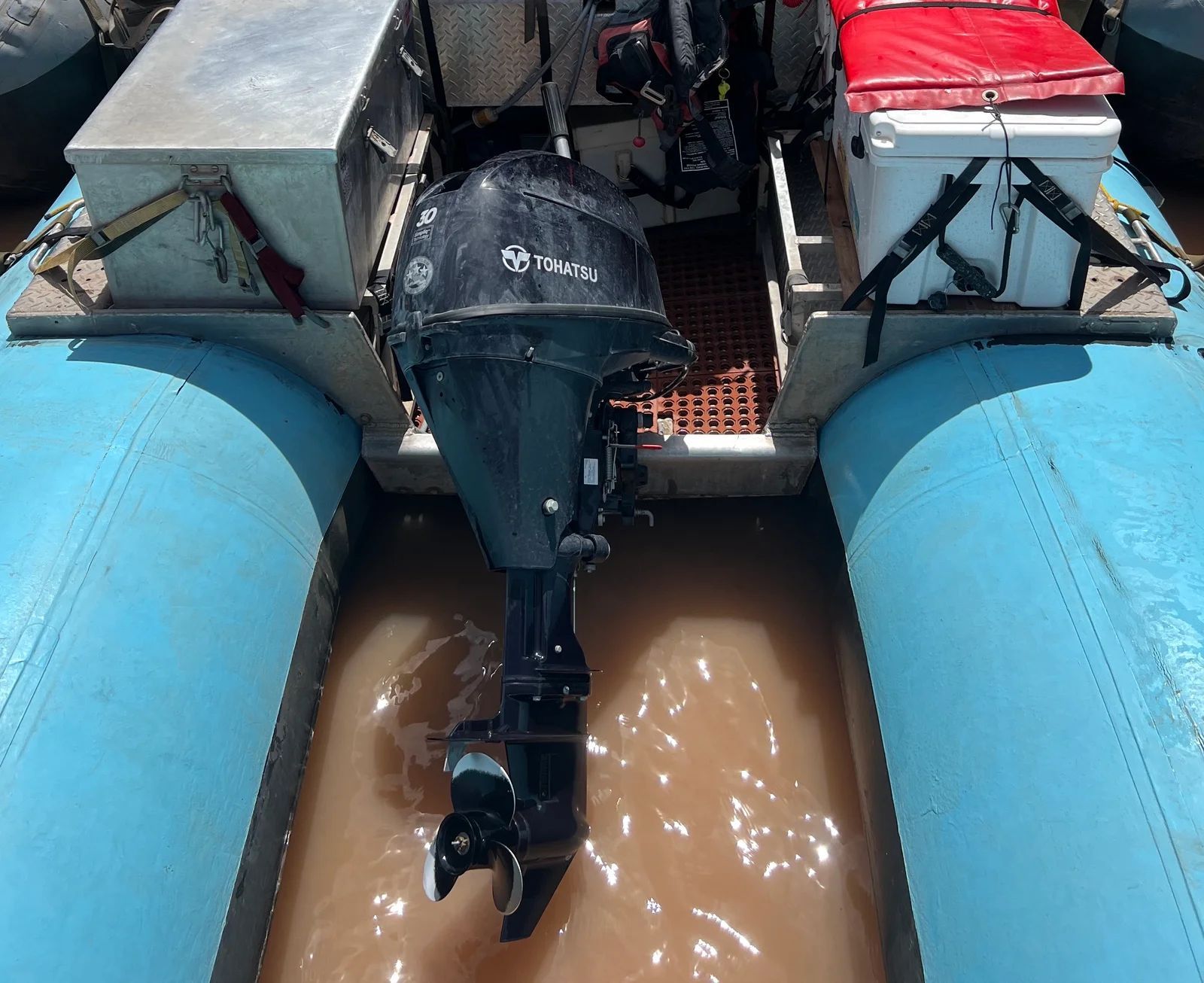
Tohatsu 30D on the back of our Grand Canyon Raft.
Tohatsu MFS 30D(2022 to Present)
Tohatsu made big changes when they switched tp the MFS30D. Most notably dropping nearly 30 lbs of weight! The MFS 30D weighs in at just under 130 lbs. This is a game changer in the river industry because the motors can be tilted easier and moved around easier. In addition to losing the weight the motor also has a 2.17:1 gear ratio providing better low end torque and the ability to spin higher pitch props for higher to end performance.
Tohatsu also incorporated a “No-mess” oil filter drip pan and a stainless steel water pump housing liner providing greater durability for silt laden waters like the Colorado River. The gear case is more torpedo shaped and will reduce drop and improve performance. Tohatsu redesigned the flywheel to create more airflow inside the cowling. This will keep electrical components cooler and maximize reliability on an already really reliable electrical system. The new intake manifold is also completely redesigned to shed unwanted weight. We have been really impressed with the 30D. The weight drop has been noticed by our guides. One of them even commented about how this was the first motor they could actually lift and move around since the 2-stroke models. We used these motors in 2023 and have switched over to a complete new fleet of Tohatsu MFS30Ds for 2024.
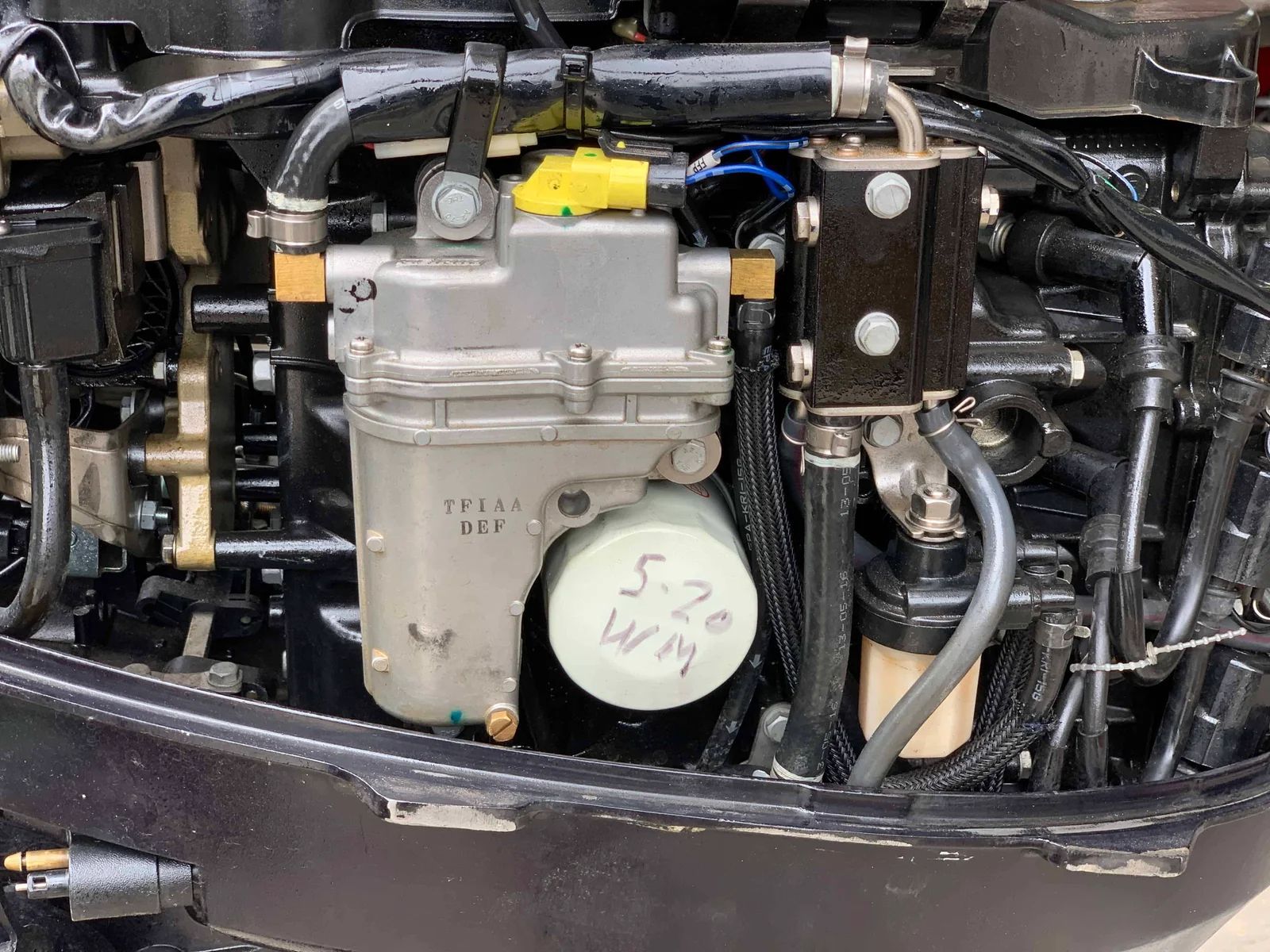
The EFI engine for the 30 Horsepower Tohatsu is beautiful and compact.
Tohatsu 30 HP Four Stroke Outboards For Sale
We specialize in the 30 horsepower Tohatsu engine. If you are in the market for a Tohatsu 30, let us know. We routinely sell used outboards. If you are looking for a new Tohatsu 30, we may be able to assist you through our sister company Mackay Marine. Feel free to call us at 1-800-253-7328. Rafting the Colorado River in Grand Canyon and Canyonlands National Park has given us confidence in these outboard engines. We have had very few problems with them.
More About the 30 Horsepower Tohatsu Four Stroke Outboards MFS30A-MFS30B-MFS30C-MFS30D