CPAP in the Outdoors

Abel O. Nelson

Approximately 22 million Americans have some form of sleep apnea; I am one of those fortunate folks and must use a CPAP machine to treat the condition. I have not allowed it, however, to impede my enjoyment of spending time outdoors, most often as a commercial river guide.

Mount Sinyala view from the Muav Gorge

This write-up describes the solution I use to enable working up to 14-day rafting trips where the power grid is nowhere to be found.


There are a number of commercially available solutions for battery-powered CPAP machines, however, most assume access to a power source within 24 hours of one’s location to recharge the battery; whether it be a wall outlet at an established campsite or a camper vehicle with a generator.


Another option is the use of a deep-cycle marine battery to power a CPAP, frankly very effective, however, the battery can be quite heavy and unwieldy making it difficult to pack around. Those assumptions do not work for the environment I travel in and necessitate a more creative solution.


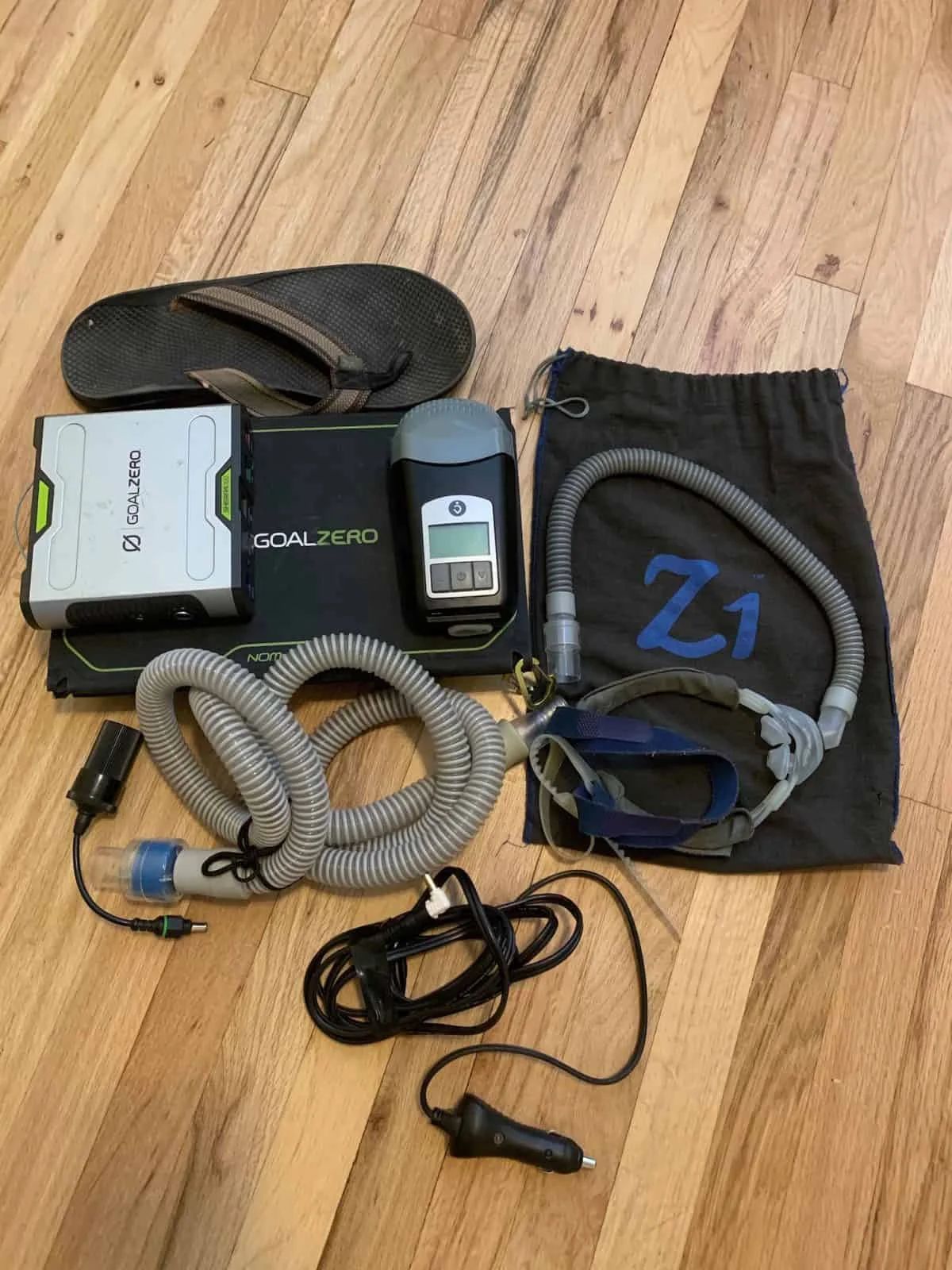
I settled on the following:


All of this fits into the Z1 travel bag, shown below, which packs into my waterproof river bag containing all my sleep gear; sleeping bag, sheets, pillow and warm stuff.

Complete Solar CPAP kit with size 12 Chaco sandal for scale

HDM has a battery kit as well as a DC mobile power adapter, but my insurance would not cover those additional items and I wanted a solar-rechargeable power source that could charge up my camera and other assorted electronics (yes, shouldn’t have all that stuff in the outdoors, but it *is* the 21st century!).


My solution allows me to treat my sleep apnea with virtually unlimited days out, so long as there are solar rays available.


The HME component is an inline humidifier, definitely not as efficient as my home machine, but helpful in the desert Southwest where I spend most my outdoor time.


Most, if not all, the outdoor/camping CPAP solutions recommend that one does not use the humidifier on a standard CPAP system. The power requirements necessary to heat water for humidification are simply too high for most battery powered machines causing the batteries to run down very quickly.


I am able to get approximately 20 hours of CPAP therapy with a single Sherpa 100 battery and with a spare I can keep one charging during the day and always have additional electrons, just in case. I understand that I could squeak more battery life if I disable the “Auto” function on the Z1 but my particular condition is best suited to auto-adjusted pressure throughout my sleep cycle.


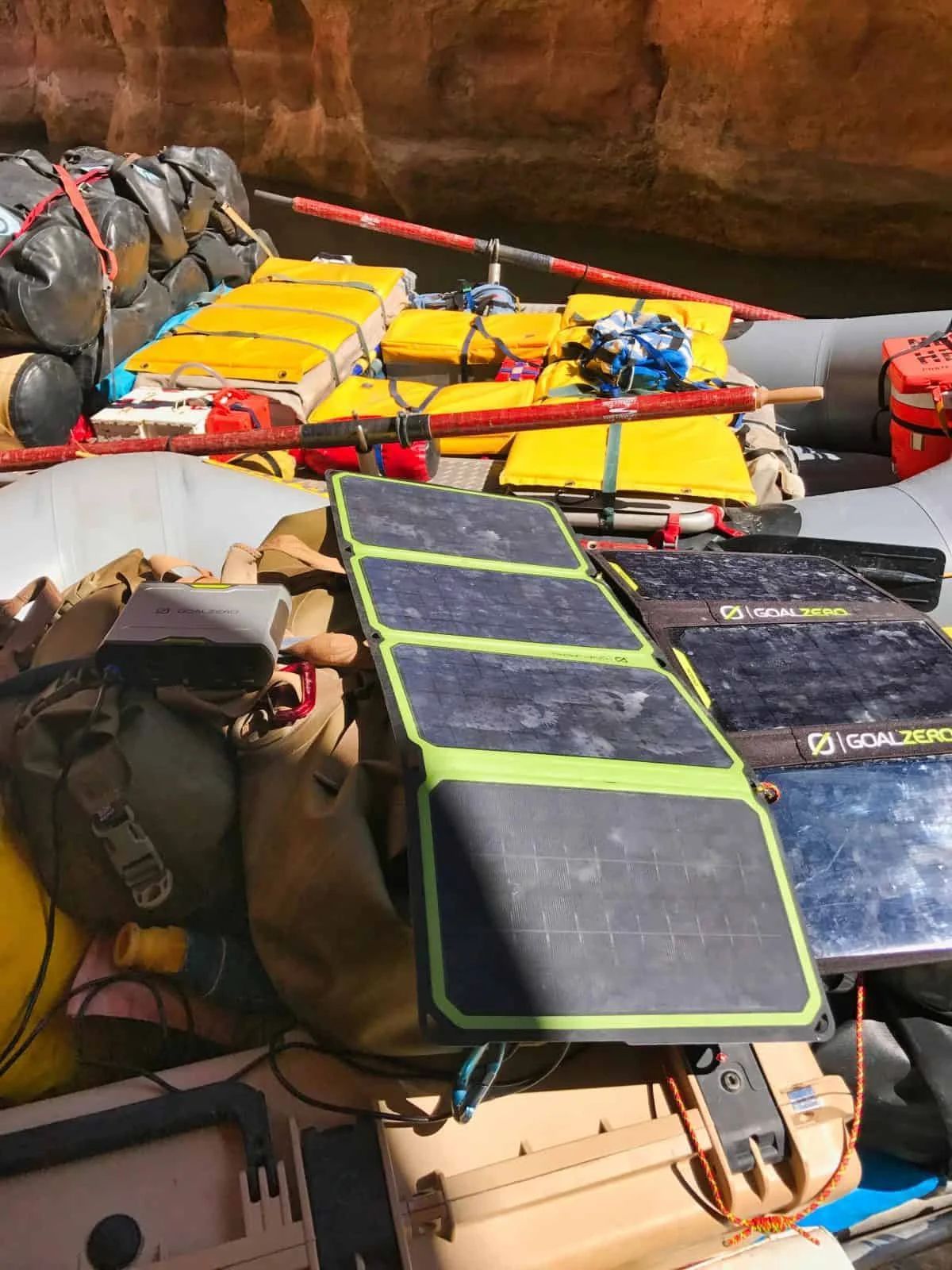
I chain my Goal Zero solar panels (Nomad 28 Plus and Nomad 20) together to increase output while charging my batteries.


This kit has enabled me the pleasure of spending extended time outdoors without concern for maintaining CPAP usage compliance. The best thing of all though, is that I get a great night’s sleep every night outside under the stars!


Below is a photo of my Sherpa 100 (partially shaded) attached to the chained Nomad panels whilst the river trip crew takes a hike up a side canyon.

Chained charging in Havasu harbor, Grand Canyon NP

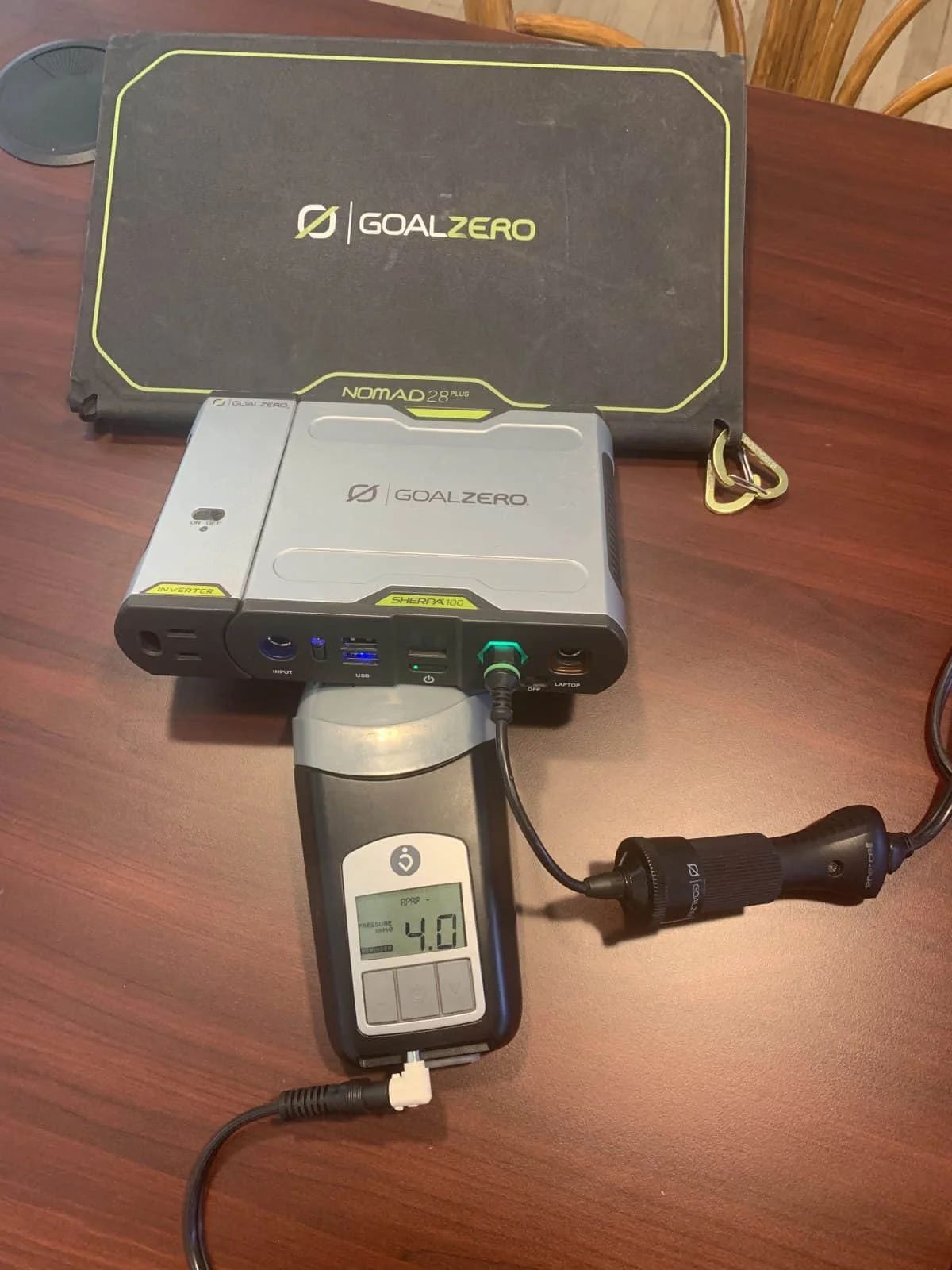
This is a close-up of the kit, less hose and 2nd panel. Extremely portable and completely TSA compliant, which means I can fly to my destination with the kit, and use the CPAP on the flight if I want to catch some zzz’s.

TSA-Compliant for air travel too!!

More About the CPAP in the Outdoors

Sandy beach inside a cavern overlooks a river, with red rock canyon walls and a blue sky.
February 15, 2026
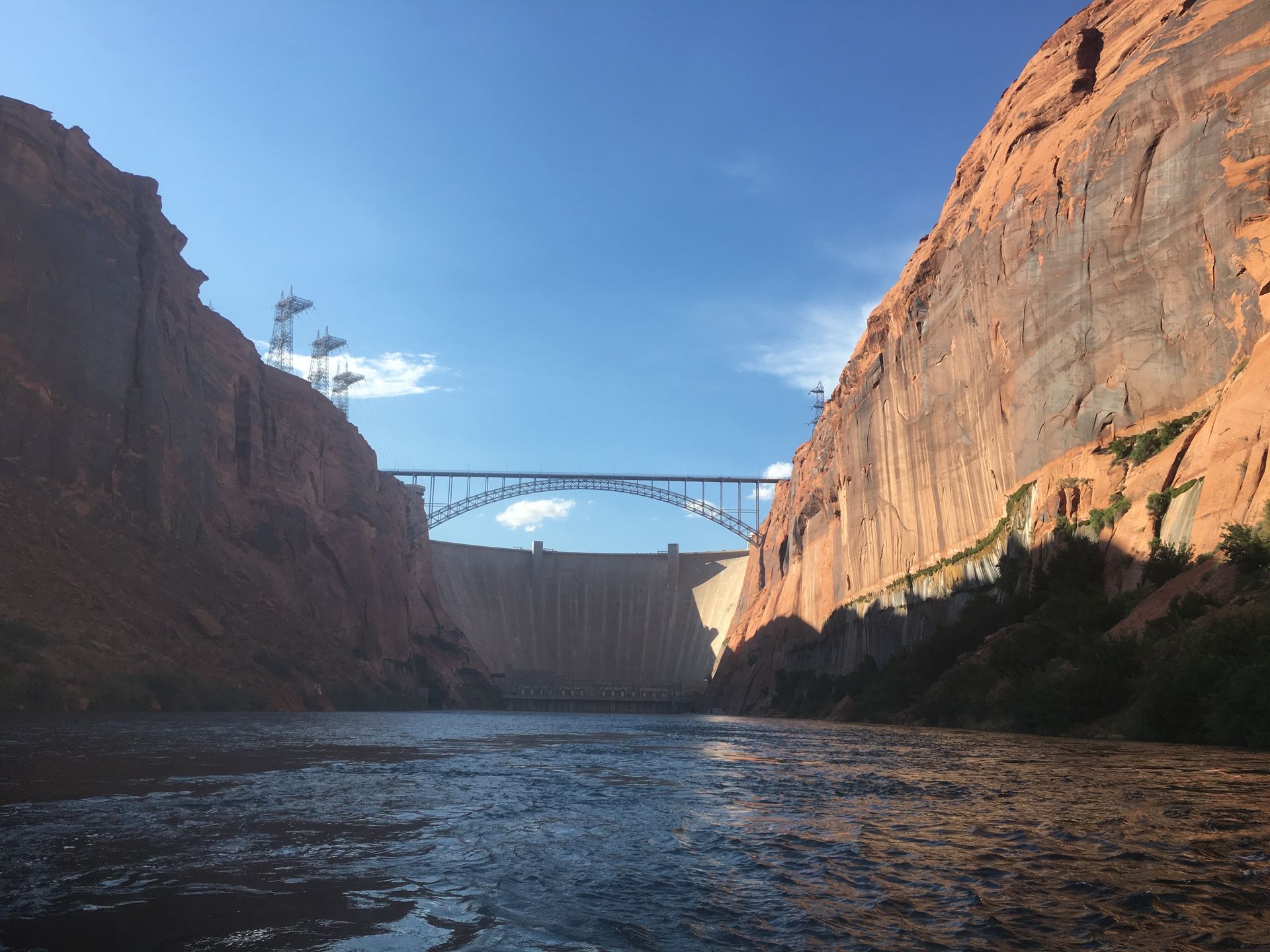
The Colorado River below Glen Canyon Dam flows through the lower reaches of Glen Canyon on its way to Lees Ferry , forming one of the most studied and discussed stretches of river in the American Southwest. Released from the base of the dam, the water is typically clear and tightly controlled. In recent years, however, lower water levels in Lake Powell have caused releases to come from shallower depths, warming the river compared to past decades and changing the conditions downstream. This reach is calm and approachable, making it a popular destination for kayaking, rafting, fishing, and flatwater exploration. Visitors often take time to linger along the banks, explore side canyons, and pull over at small beaches and alcoves—experiencing the river at an unhurried pace that encourages observation and learning.  Quick facts about this stretch of river naturally help frame why it matters:
Glen Canyon Dam with bridge and canyon walls under a blue sky. Water flows towards the dam.
February 12, 2026
The Dirty Devil River joins the Colorado River at River Mile 169.5. John Wesley Powell camped at this confluence on July 28, 1869, describing the tributary as extremely muddy and foul-smelling. Jack Sumner later named it the Dirty Devil. The Dirty Devil is formed by the confluence of Muddy Creek and the Fremont River near present-day Hanksville, Utah. The Fremont River originates at Fish Lake and flows along the Waterpocket Fold through Capitol Reef National Park. Muddy Creek drains the San Rafael Swell. Historic Context — Powell’s Expeditions: Powell’s 1869 expedition recorded the Dirty Devil as both a geographic reference and a warning. In his later expeditions of 1871–72, Powell returned with improved boats and a scientific mandate. Tributaries such as the Dirty Devil became fixed reference points for mapping and geologic observation. Powell’s journals note the heavy silt load and poor water quality here, and his party avoided using the Dirty Devil as a water source when possible.
Camping gear on a sandy beach near a red rock wall and river under a cloudy sky.
February 12, 2026
Camping and Dining