
A Typical Day on the River
A Rafting Trip Down the Colorado River in the Grand Canyon – What a Typical Day is like
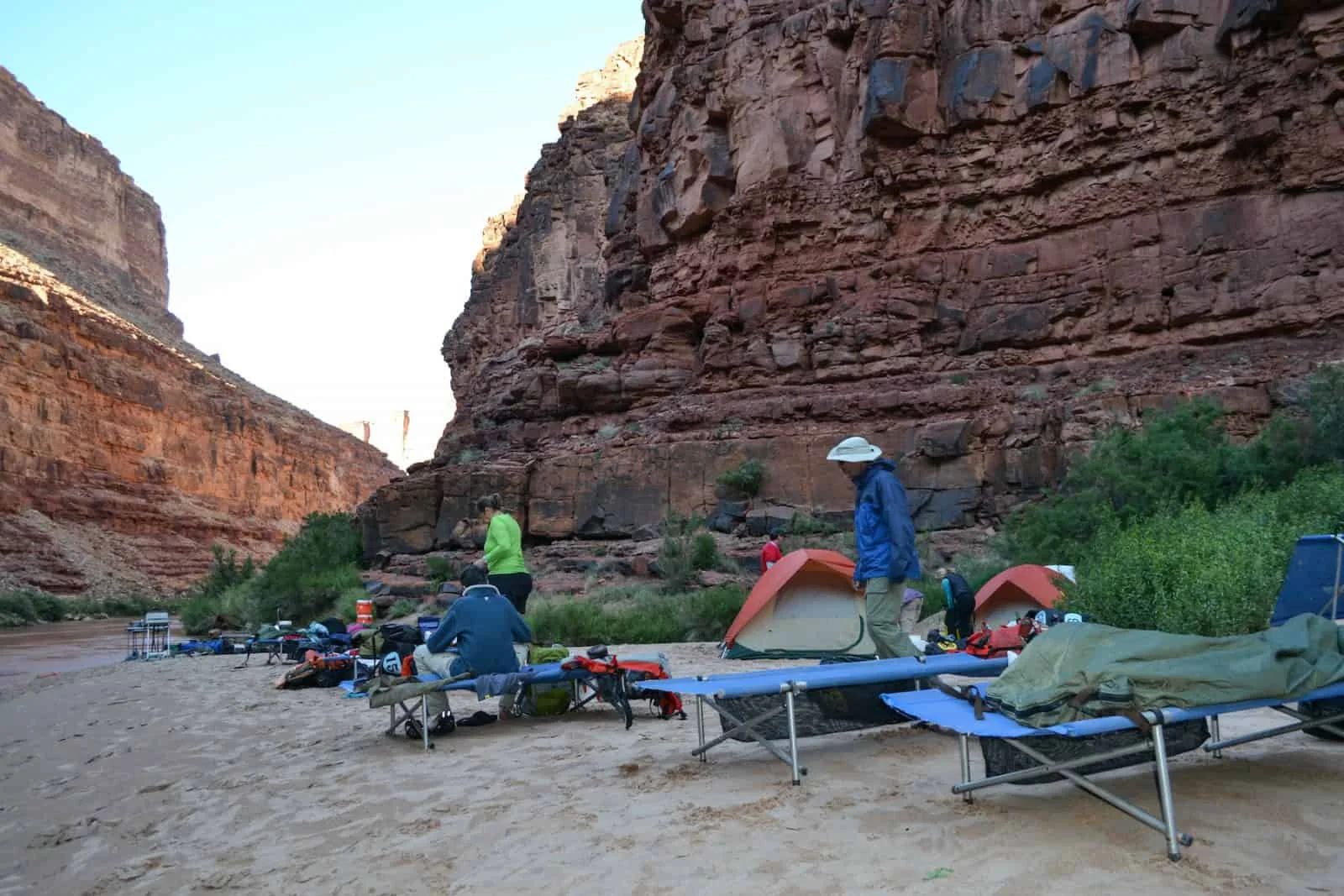
The morning begins at first light with a loud “COFFEEEEEE” call from the river guides, signifying that fresh coffee, hot chocolate, tea, and juice are ready for you at the camp coffee table. It is now time to wake up from your night of sleeping under the stars, sit up on your cot, slip on some shoes, grab your mug, and head down to the coffee table for a hot beverage or some juice. Hot water is available to prepare tea and hot chocolate. Coffee is made “cowboy style,” which means grounds and all are brought to a boil and then allowed to settle in the pot for a few minutes. We use triple certified coffee (organic, fair trade, and shade-grown) that always has a good flavor, but you will want to use the nearby strainer to catch the grounds when you pour it in your cup. Also close at hand are sugar, milk, and other fixings. Once you have your drink in hand, you can head back to your campsite to pack up personal items and camping gear into your dry bags and take down your cot.
About 20 minutes after the coffee call, you will hear a “BREAKFAAAAST” call. Come and get it while it’s fresh and hot! If you still have some packing to do, there will be time to finish up after breakfast, while the crew dismantles the kitchen and loads everything back on the rafts. Breakfast, like lunch and dinner, is served buffet style, with a variety of items and condiments. Although meals vary from day to day, breakfast generally includes fresh fruit, breakfast meat, a main item such as eggs, pancakes or French toast, and cold/hot cereal options. Meal service includes nice plates, bowls, and utensils that are washed and reused throughout the trip.
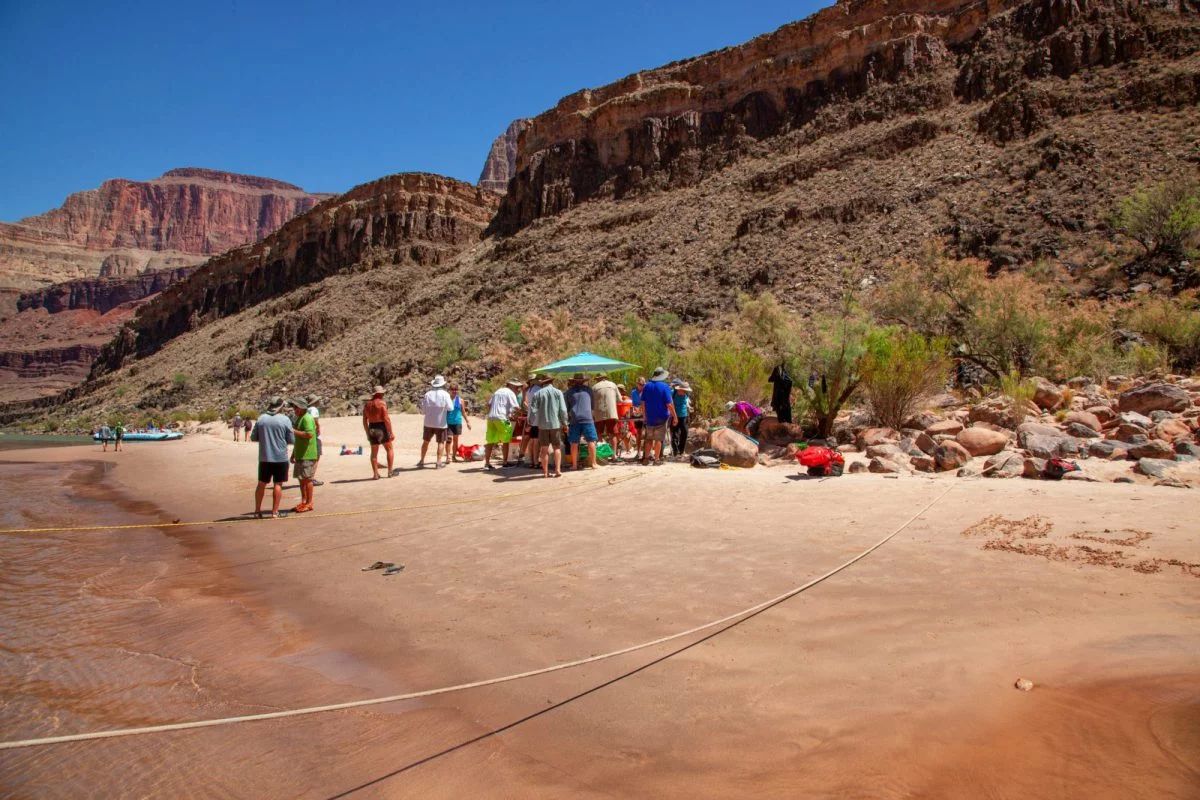
There will always be a handwashing station near the kitchen area, and guides will remind you to “wash your hands” before every meal. This is to prevent the spread of illness and to ensure everyone stays healthy throughout the trip. We also have a 4-bucket dishwashing system that is set up to ensure dishes and utensils are properly washed and sanitized. You will be asked to wash your own dishes. After a meal, you will first scrape any left-overs into the garbage bag, then wash the plate/utensils in a cool soapy bucket, followed by rewashing the items in a hot soapy bucket, then a rinse in a hot water bucket, followed by a cold Clorox rinse. Dishes and utensils are then placed on a dish rack to air dry.
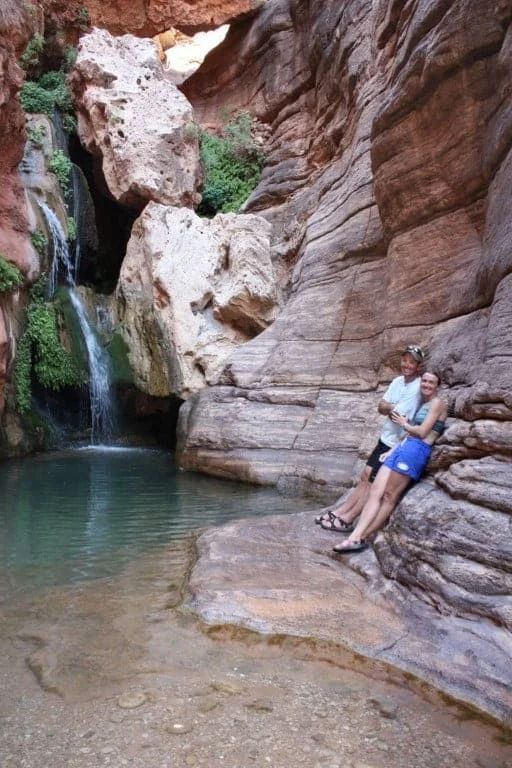
As breakfast is winding down, the guides will start to load kitchen kits, Dutch ovens, stoves, tables, and other cooking equipment back onto the raft. Guests can help by packing cots and chairs and putting them in labeled mesh bags that will be laid out on the sand. Each bag will have a tag explaining how many cots or chairs go in that particular bag. Once a bag is full, it is a great help to the crew if guests will tighten the straps around the bags and take them down by the boats for loading. Volunteer help with clean-up and packing is always appreciated, as the crew strives to break camp early so there is more time during the day to hike, explore, and stop to play in waterfalls and side streams.
After the kitchen gear is stowed safely back on the boats, the crew will lace up the decks and buckle down the hatches. Around this time, a “last call” for the bathroom will be made, the crew will ask for the cots and chair bags, then the personal sleep kit bags, and finally, the personal clothing bags, all of which will be loaded in their appropriate places aboard the raft and tied down securely. To set the plan or tone for the day, one of the guides may give a short reading, an interpretive talk, or tell a good story while the rest of the crew dismantles and cleans the bathroom equipment and stows it away on the raft. Lastly, a crew member or a willing guest will do a “beach sweep” to make sure no one left anything and then we’ll untie the boats, push off, and begin a new day on river.
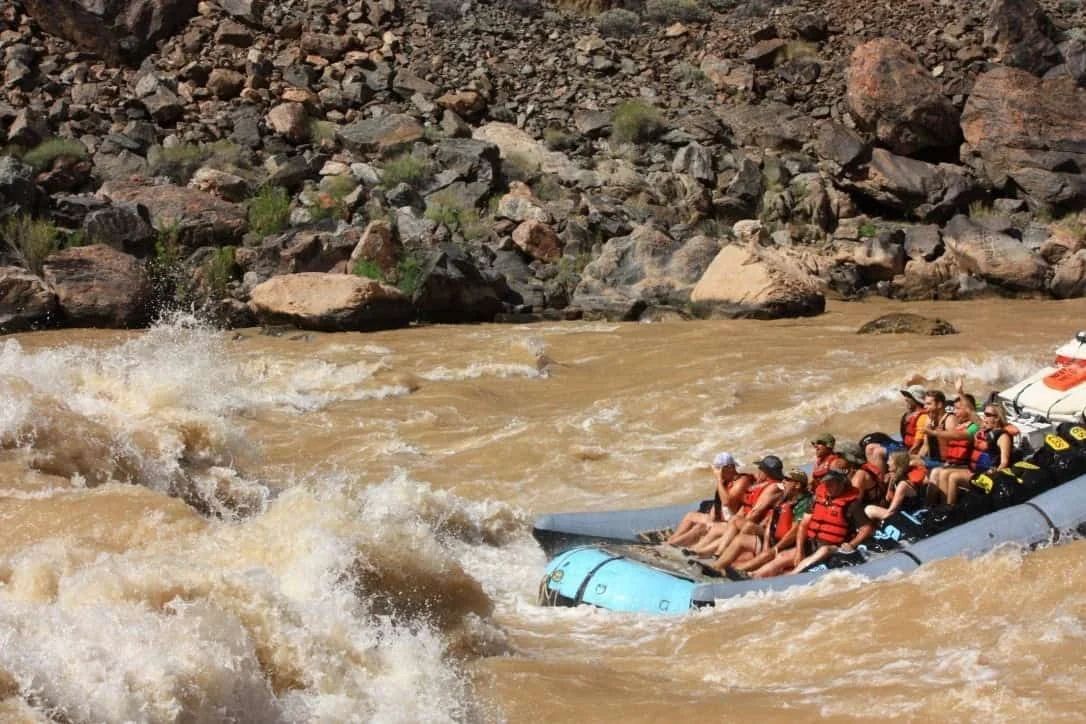
During dinner the previous night, your guides may have given you an idea of what to expect and how to prepare for your morning on the river. This could mean the need for rain gear due to a series of early-morning rapids; or notice to keep your hiking boots/shoes handy (stow them in our “community” boot bag on the raft), because the guides are planning a morning off-river hike. This will depend on the day and our location on the river. Following is a description of an actual day on the river, but keep in mind that every trip is different and unique. The Grand Canyon is a place that could be explored for a lifetime and you would never find all of its hidden treasures.
Afternoons and evenings on the river are far more relaxed than the mornings. There is time to bathe, read, relax, or have a cold drink. Usually, there will be some simple hors d’oeuvres or snacks to tide you over until dinner is ready. Dinners are freshly-prepared and include salad, vegetables, entrée and dessert. The group usually gathers together with the crew in a circle to eat, share stories, and talk about the day. After dinner, each person washes their plates and utensils and fill up their water bottles. As night falls, some people wander off to their own camp to enjoy some quiet time, while others continue to sit together and chat.
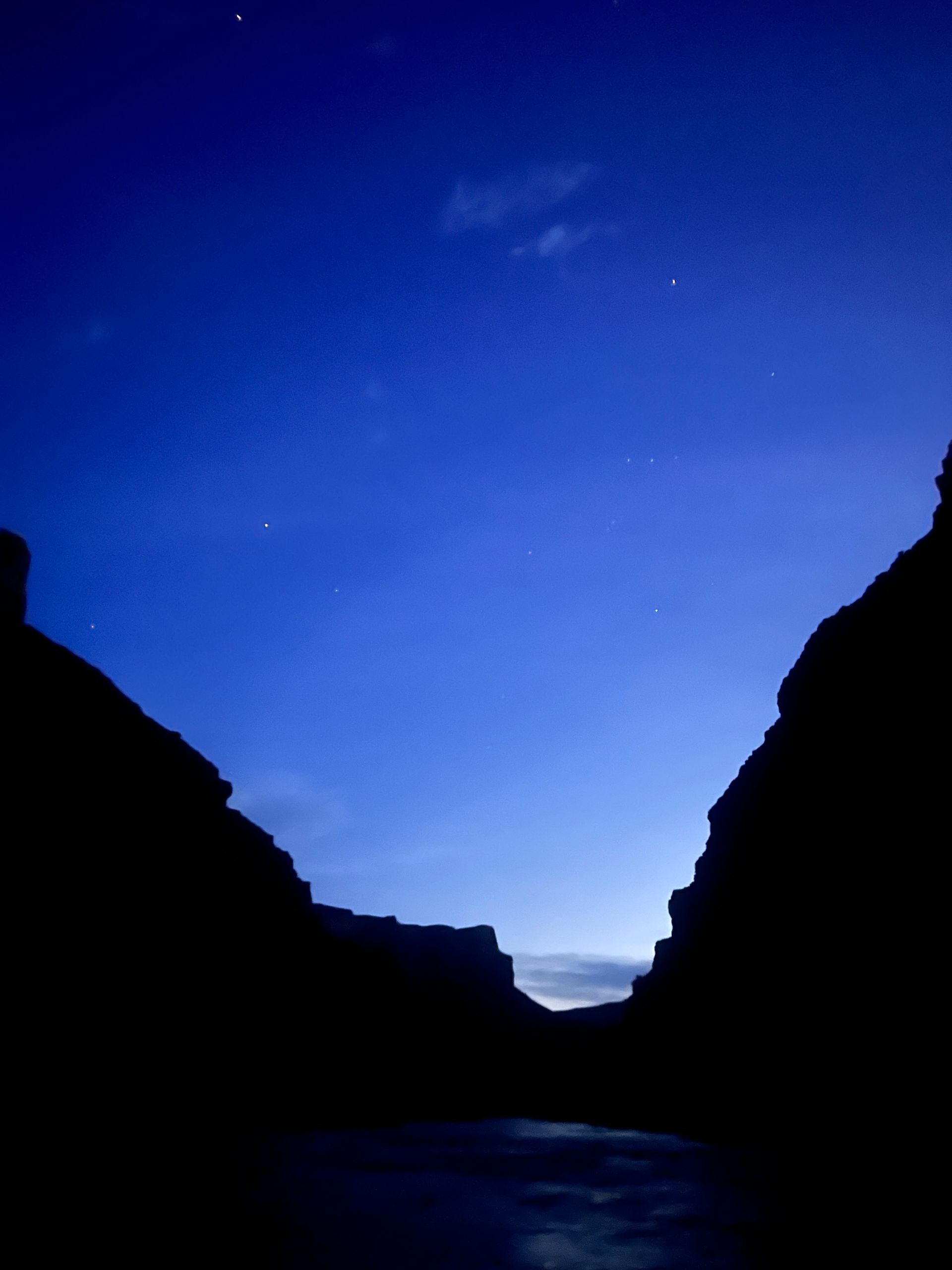
As night falls, the Grand Canyon takes on a completely different character. The sun and blue sky give way to dusk and the stars begin to appear. When full darkness blankets the canyon, the sky is filled with stars and the Milky Way seems close enough to touch. It’s nice to lay on your cot and count shooting stars until you fall asleep. Later, when the moon rises over the canyon walls, it’s not uncommon to wake up and think it’s dawn, because of the moon is so bright. But after an active day, you won’t have trouble going back to sleep. Next thing you know someone will be yelling “COFFEEEEEE!”
More About the A Typical Day on the River