
Half the Park Is After Dark: Why the Night Sky Matters on a Grand Canyon River Trip
Half the Park is After Dark
At Colorado River & Trail Expeditions, we’ve spent more than five decades guiding people through the Grand Canyon. Most visitors come expecting towering cliffs, big whitewater, and mile-deep geology. What surprises many of them is this:
Some of the most powerful moments happen after the sun goes down.
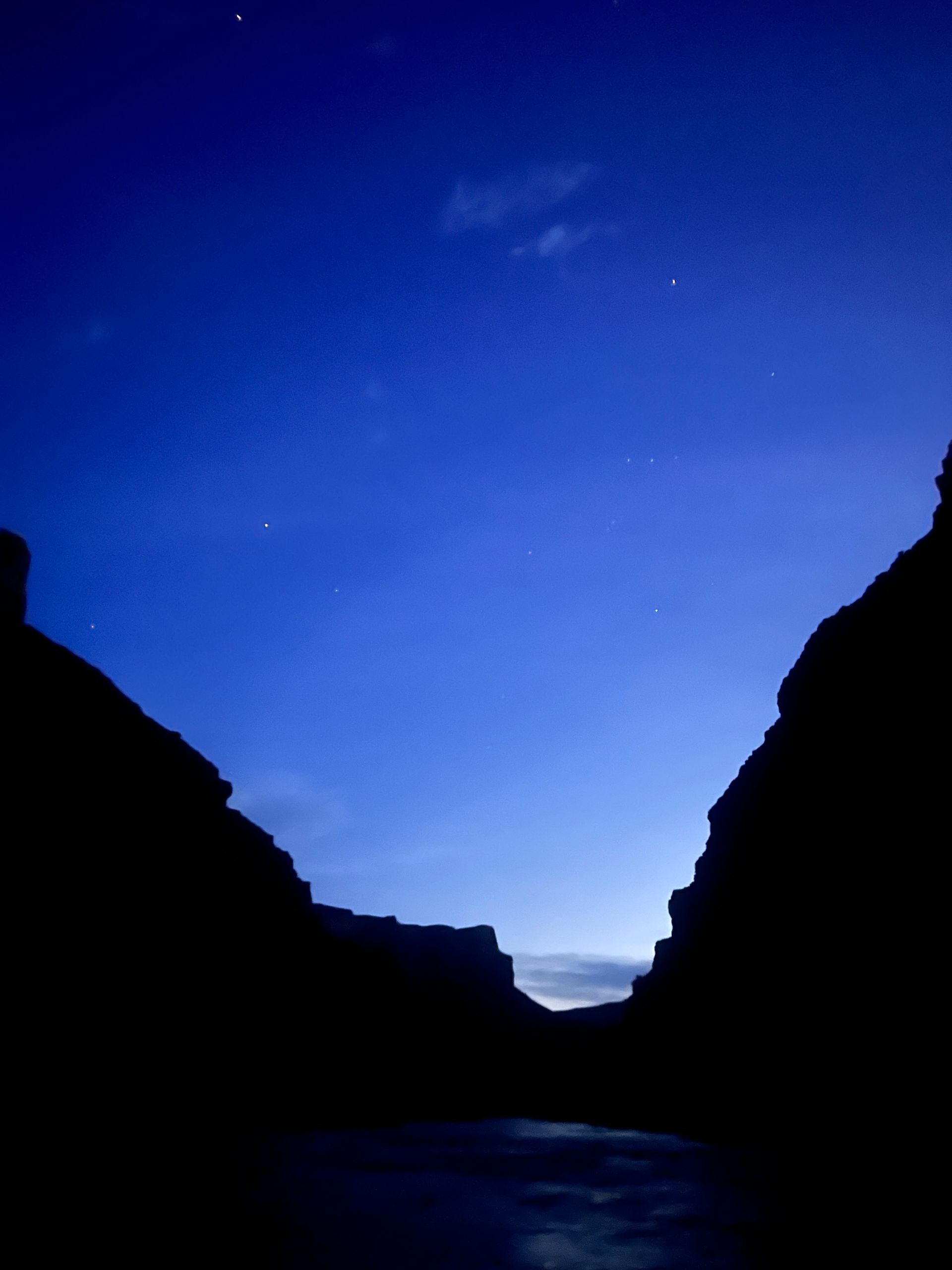
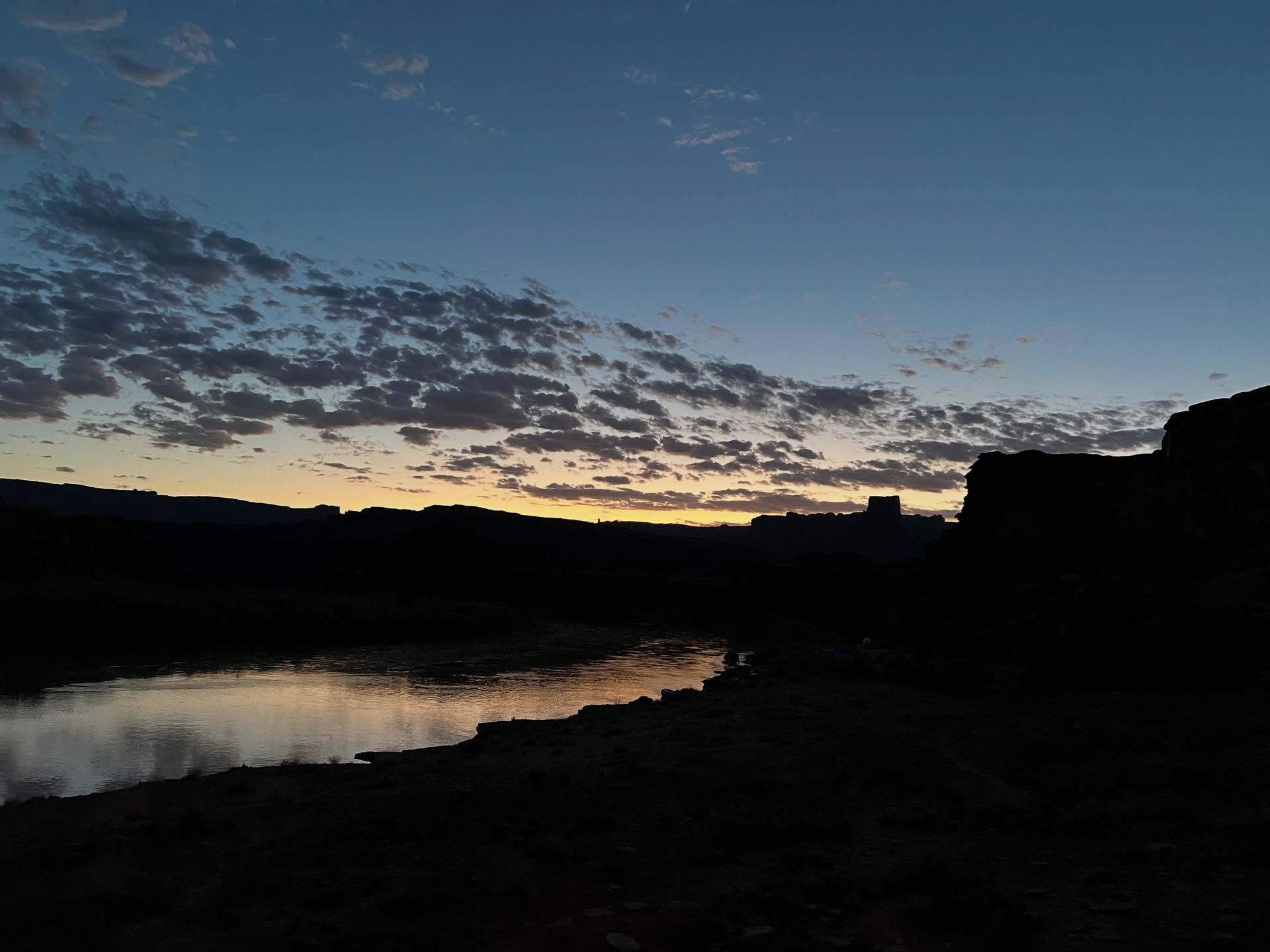
On a river trip, when the motors are quiet or the oars are shipped, the canyon reveals another side of itself—one that can’t be captured in photos or postcards. Above the camps, far from roadways and resort lighting, the Milky Way arches from rim to rim. Satellites drift silently overhead. Meteors cut across the sky. For many of our guests, it’s the first truly dark sky they’ve ever experienced.
That experience isn’t an accident. It exists because of decades of deliberate work by the National Park Service and its partners. One of the most impressive examples of that effort is detailed in the Grand Canyon National Park Dark Skies Program Annual Report 2025, a document we believe every canyon lover should know about.
Darkness as a Protected Resource
When people think about protecting the Grand Canyon, they often think about water flows, endangered species, or trail maintenance. Rarely do they think about darkness.
But darkness is a finite resource.
Artificial light spreads far beyond its source. Cities like Phoenix and Las Vegas glow against the horizon. Poorly designed lighting disrupts wildlife, human sleep cycles, and even our ability to see the stars. Without active management, the night sky can be lost just as surely as a riverbank can erode.
The Dark Skies Program exists to prevent that loss. According to the 2025 report, Grand Canyon National Park has now retrofitted 95% of its lighting to meet dark-sky standards—using shielded fixtures, warmer bulbs, timers, and smarter placement. More than 200 lights were upgraded in 2025 alone, and the park is on track to reach full compliance by 2029.
That matters to us as river guides, because darkness is part of the wilderness experience we promise.
What We See From the River
Below the rim, the canyon becomes something different. Camps sit tucked on sandbars next to roaring rapids and inviting side canyons. There are no streetlights, no passing headlights, no illuminated buildings. On moonless nights, the sky can feel almost overwhelming.
We’ve watched guests go quiet mid-sentence when they look up. We’ve heard people say things like:
- “I’ve never seen this many stars.”
- “I didn’t know the Milky Way was real.”
- “This feels ancient.”
- “I didn’t sleep well because the sky was so amazing”
Those reactions are exactly why the Dark Skies Program emphasizes that “Half the Park is After Dark.” The report documents more than 73,000 visitors attending night-sky programs in 2025, from ranger-led constellation talks to telescope viewing at Phantom Ranch and along the rims.
For river runners, those programs complement what happens naturally on a multi-day trip. We don’t need telescopes to feel the scale of the universe—though they’re incredible when available. Sometimes all it takes is a sleeping bag, a clear horizon, and silence.
Science, Data, and Accountability
One thing we respect deeply about the Dark Skies Program is that it’s not just inspirational—it’s scientific.
The 2025 report details extensive sky-quality measurements taken throughout the park, including at Phantom Ranch, Hopi Point, Desert View, and Hermit’s Rest. These measurements quantify darkness using standardized metrics required for International Dark-Sky Park certification, allowing the park to track changes over time and identify external sources of light pollution.
That data matters, because it turns “we think it’s darker” into measurable protection.
From a river-guide perspective, it’s reassuring to know that when we tell guests they’re experiencing one of the darkest skies left in the continental United States, that statement is backed by real monitoring—not just tradition or reputation.
Star Party: A Celebration of Darkness
The crown jewel of the program is the Grand Canyon Star Party, now in its 35th year. What began in 1991 with a handful of astronomers has grown into the largest star party in the country, drawing nearly 10,000 visitors and more than 160 volunteer astronomers in 2025.
For those lucky enough to be on a river trip during the Star Party, it’s a reminder that the night sky connects rim and river, scientists and guides, first-time visitors and lifelong canyon hands.
We see Star Party as an extension of the same ethic that governs river travel: share the experience, educate with a love of place, and leave it better than you found it.
Why This Matters to CRATE
At Colorado River & Trail Expeditions, our trips are designed around immersion. Moments along the river move slowly enough to notice changes in light, sound, and temperature. Sometimes we choose camps with open horizons or narrow slits to look through based on the night sky We encourage guests to stay up late—or wake early—when conditions are right to connect with something incredible in the night sky.
The Dark Skies Program supports that philosophy at a park-wide scale.
Without shielded lighting at facilities.
Without cooperation from nearby communities.
Without volunteers, scientists, and rangers doing the behind-the-scenes work.
…the river experience would be fundamentally diminished.
The 2025 report makes it clear that protecting darkness isn’t about eliminating light—it’s about using light wisely. Timers, warm color temperatures, and thoughtful design allow people to move while preserving the night. That same balance is something we practice and encourage on the river.
Looking Forward
As the park moves toward full dark-sky compliance by 2029, the challenges will shift from retrofitting lights to maintaining awareness. The report notes that even well-intentioned fixture changes can undo years of progress if people don’t understand why standards exist.
Education—like this report—is the key.
For us, that education happens camp by camp, conversation by conversation. When guests ask why the stars feel different here, we explain light pollution and why it is so hard to observe the night sky in cities.
Final Thoughts
We encourage anyone planning a Grand Canyon trip—whether by raft, on foot, or to the rim—to think about what happens after sunset. Bring a headlamp with a red light. Step away from artificial glow. Give your eyes time to adjust.
And if you want to understand how much work goes into keeping those stars visible, we highly recommend reading the Grand Canyon Dark Skies Program Annual Report 2025, created by the National Park Service and Grand Canyon Conservancy .
People experience a lot of life changing moments on a river trip. One of those will certainly be:
The moment they looked up—and saw the universe.
More About the Half the Park Is After Dark: Why the Night Sky Matters on a Grand Canyon River Trip