
A Day in the Life of a Grand Canyon Rafting Trip
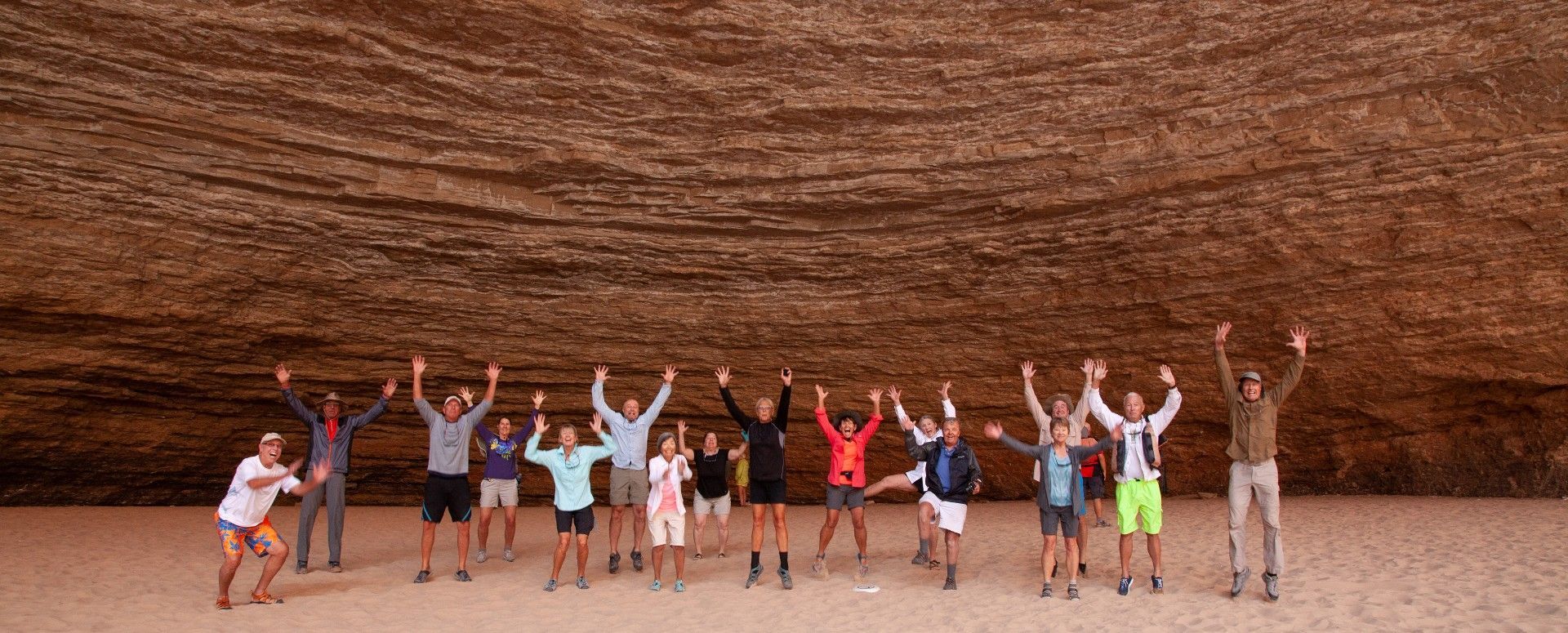
The Grand Canyon is a place of breathtaking beauty and endless wonder, where every moment feels alive with possibility. A day on the river is a whirlwind of adventure, from sunrise to starry night, with awe-inspiring sights and experiences that pass by in a flash.
Each morning begins with the soft light of dawn painting the canyon walls and the soothing sounds of the Colorado River setting the tone for the day ahead. As I prepare coffee and watch the world come alive, I’m reminded of the magic this place holds.
To wake up my fellow rafters, I call out a loud and cheerful “Coffee Call!” Everyone comes down, washes their hands, and grabs a cup of coffee, hot chocolate, or tea before heading back to their camp to start packing up their cots and sleeping bags. About half an hour later, a hot, healthy, and filling breakfast is ready.
After breakfast, my river crew and I tear down the kitchen and load it back onto the rafts while the group finishes packing their sleep gear. Guests bring their dry bags and camping items back to the boats, and once the bathrooms are packed away, we’re ready to head downriver.
Each river day is unique. Typically, we’ll start with a morning hike, stop for lunch at a scenic spot, and fit in another hike in the afternoon before finding a place to camp for the night. Hikes range from short walks to stunning waterfalls to longer, more challenging treks that reward us with breathtaking views of the canyon. Hikes are always optional. Some guests jump at every chance to explore, while others prefer to relax in the shade, read a book, or take photographs of the incredible scenery.
Time on the river is equally varied. On some stretches, we float quietly, letting the sounds of the canyon surround us. Other times, the guides will read a passage from a book or poem, adding to the sense of wonder. On certain days, we’re focused on covering miles, navigating thrilling rapids, and making progress downstream.
As the shadows of the canyon walls begin to overtake the beaches, we arrive at camp, ready for the next adventure the evening has in store. There’s a shared energy as everyone helps unload the rafts and set up the kitchen, a rhythm that quickly becomes second nature. While camp comes together, my crew puts out hors d’oeuvres, and the delicious aromas of dinner begin to fill the air.
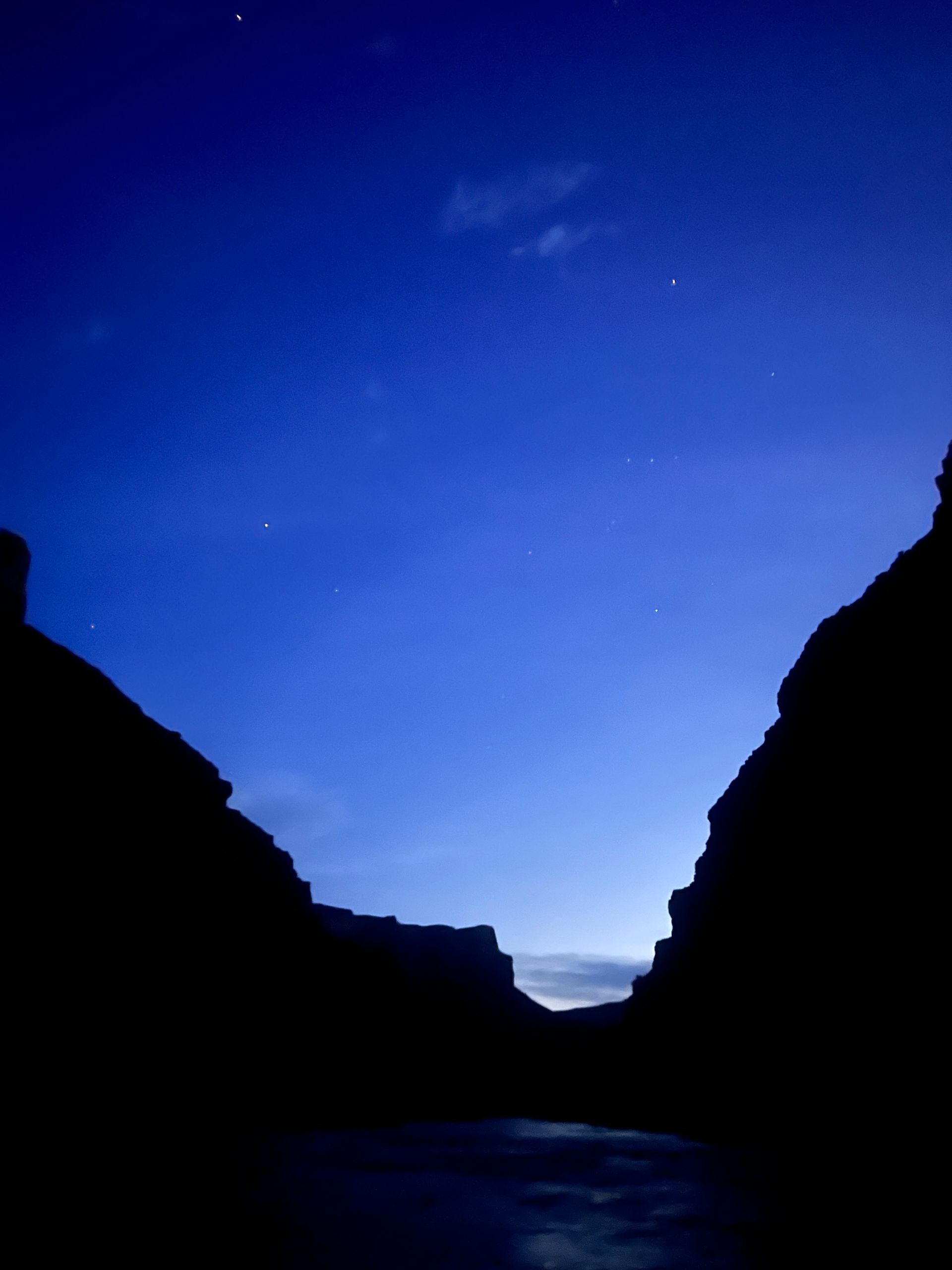
As night falls, real friendships take root, and laughter echoes through the canyon. When it’s time to sleep, we drift off under a canopy of stars, more vivid and expansive than most have ever seen. Before we know it, the first signs of dawn appear, and the sound and smell of coffee signal the start of another unforgettable day.
FAQ's
Which trip will I raft through the entire Grand Canyon?
The Lees Ferry to Pearce Ferry trip is the ideal option if you have the time to experience the entire Grand Canyon. It offers a complete, immersive journey through the canyon’s diverse and breathtaking landscapes.
What’s the difference between a “full canyon” trip (Lees Ferry to Pearce Ferry) and a “partial canyon” trip (e.g., Lees Ferry to Phantom Ranch)?
A “Full Canyon” trip covers the entire length of the Grand Canyon, providing a comprehensive experience from start to finish. A “Partial Canyon” trip, such as Lees Ferry to Phantom Ranch, covers only a section of the canyon and typically requires hiking or helicopter transport in or out of the Grand Canyon.
Do you recommend hiking in or out at Phantom Ranch, or would a helicopter take-out be better for some people?
Hiking in or out at Phantom Ranch can be extremely strenuous due to the steep gradients and long distances involved. If you plan to attempt the hike, proper training is essential to ensure you are physically prepared. For many, the helicopter option is a more practical and less demanding alternative, offering a convenient and scenic exit from Whitmore Wash. Helicoptering in or out at Phantom Ranch in not allowed.
What’s the best section of the river for someone looking for a more relaxed experience without a lot of intense rapids?
The section below Whitmore Wash offers a more relaxed experience with fewer intense rapids than the areas above Whitmore Wash. The most challenging rapids are found between Phantom Ranch and Whitmore Wash, making this southern section ideal for those seeking a less intense rafting experience.
What’s the difference between a motorized rafting trip and a paddle raft trip in terms of the experience and the level of physical effort required?
Paddle raft trips require continuous physical participation, as everyone on board plays an active role in navigating the raft, especially through the flatter sections of the river. In contrast, motorized and oar-powered trips do not require as much active participation during the river portion, but they still offer plenty of opportunities for adventure through hiking and off-river excursions.
Is it better to do the helicopter take-out at Whitmore Wash or to extend the trip to Pearce Ferry?
Both the helicopter take-out at Whitmore Wash and the extended trip to Pearce Ferry provide distinct experiences. The helicopter offers a thrilling and efficient exit, shortening the trip by about a day, but covering all the biggest rapids and best side canyon hikes. However, for those who have not yet rafted the entire Grand Canyon, continuing to Pearce Ferry is the preferred option. Extending the trip allows you to fully experience the canyon’s grandeur, landscapes, and rapids, providing a more complete and rewarding adventure.
Do you recommend a longer trip (e.g., Lees Ferry to Pearce Ferry) or a shorter trip (e.g., Whitmore Wash to Pearce Ferry) for a first-time river runner?
For first-time river runners, the all-inclusive Grand Canyon Ranch and Raft trip offers a fantastic introduction to rafting in the canyon. However, if you’re looking for a more spectacular experience, the full canyon trip from Lees Ferry to Pearce Ferry is the ultimate choice, providing an unforgettable adventure through the entire Grand Canyon.
FAQ's About Geology and Formation of the Grand Canyon Rapids
How were the rapids of the Grand Canyon formed, and what geological processes contribute to their existence?
The Lees Ferry to Pearce Ferry trip is the ideal option if you have the time to experience the entire Grand Canyon. It offers a complete, immersive journey through the canyon’s diverse and breathtaking landscapes.
Why are some rapids in the Grand Canyon more intense than others?
Most rapids in the Grand Canyon are classified as Class III, with some reaching Class IV at certain river flow levels. The intensity of a rapid depends on several key factors:
- Gradient – The steepness of the river channel through the rapid influences the speed and power of the water. A steeper gradient results in faster-moving water and more turbulence.
- Rocks in the Channel – Boulders, debris, and other obstacles in the river channel disrupt the water flow, creating waves, holes, and eddies that increase the rapid’s difficulty.
- River Constriction – When the river narrows, the same volume of water is forced through a smaller space, increasing the speed and turbulence, which makes the rapid more intense.
These factors combine in different ways at each rapid, which is why their intensity can vary significantly across the Grand Canyon.
How does the flow of the Colorado River affect the rapids over time? Are they changing or evolving?
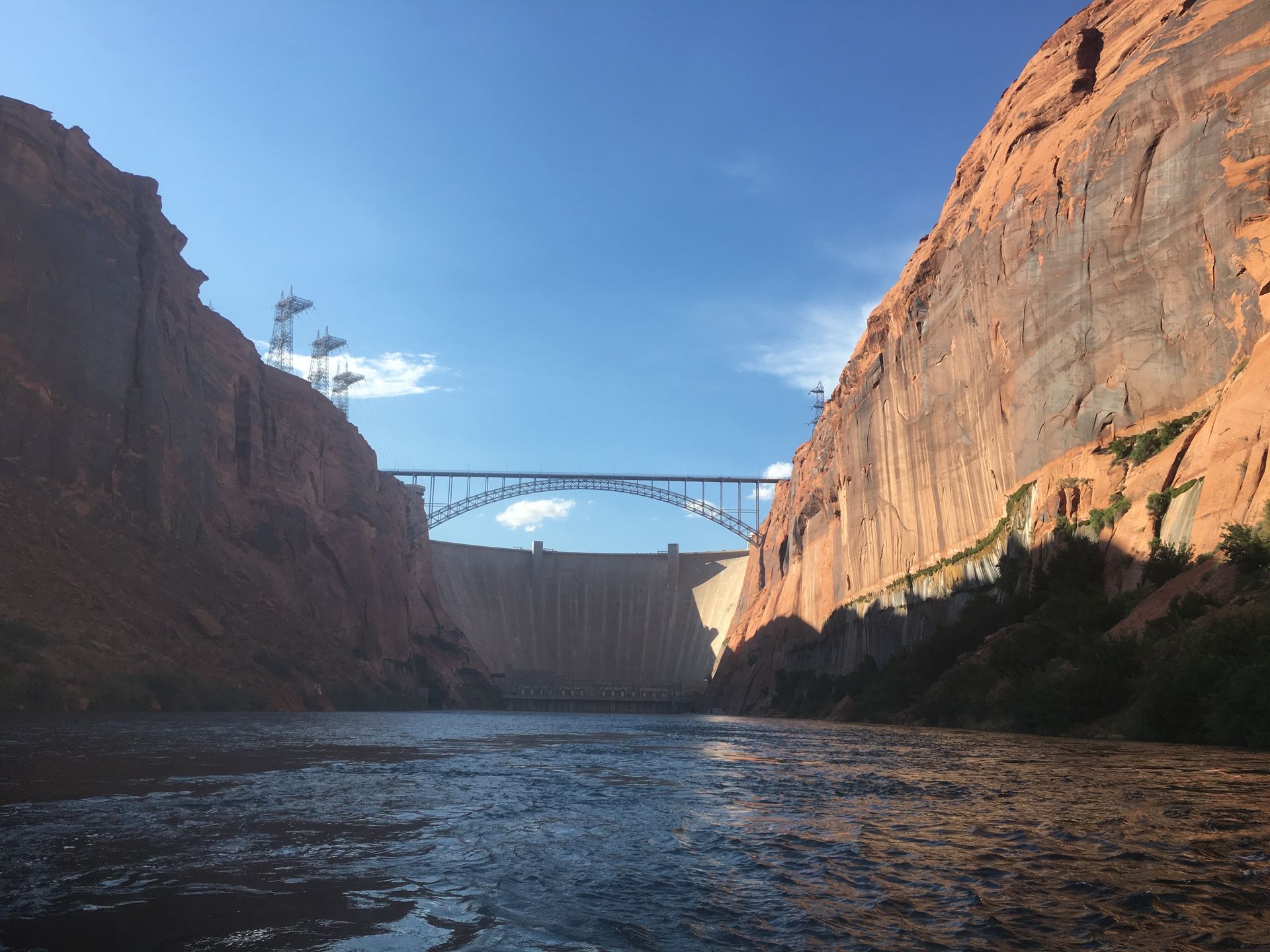
The flow of the Colorado River, and consequently the nature of its rapids, is heavily influenced by Glen Canyon Dam, which regulates the river’s flow. Before the dam was constructed, the river experienced large spring floods, which naturally flushed debris downstream after flash floods from side canyons. These powerful seasonal flows helped to reshape and maintain the rapids, preventing the buildup of debris over time.
Since the completion of Glen Canyon Dam, however, the natural flooding cycle has been replaced by controlled releases, which lack the magnitude of pre-dam floods. As a result, when side canyons flash flood and deposit debris into the river, it becomes harder for the regulated flows to wash that debris downstream. This has led to a gradual buildup of material in certain rapids, making them progressively harder to navigate, especially at low flows.
At low flows, rocks and debris that remain exposed can increase the technical difficulty of rapids. This is particularly challenging for larger motorized rafts, which require more precision to maneuver around obstacles at reduced water levels. In contrast, higher controlled flows can smooth out some rapids but may not have the power to fully remove accumulated debris.
In summary, the flow of the Colorado River—once governed by natural cycles—is now tightly regulated, which has changed the way rapids evolve. While the dam’s operation provides benefits like flood control and hydroelectric power, it has also contributed to a dynamic where some rapids in the Grand Canyon are becoming more difficult to navigate over time.
What role do debris flows from tributaries, such as flash floods, play in shaping the rapids?
Flash floods play a significant role in shaping and altering the rapids of the Grand Canyon. Each time a flash flood occurs, debris such as rocks, sediment, and boulders is washed from tributaries into the Colorado River. This debris often settles at the mouths of side canyons, altering the structure and flow of the river at that location, which directly impacts the characteristics of the rapid.
The extent of these changes varies—some flash floods result in dramatic transformations to a rapid, while others cause only minor adjustments. Over time, this process of debris deposition and rearrangement continuously shapes the rapids, making them dynamic and ever-changing features of the river.
Are there specific rock types or geological features in the Grand Canyon that influence the rapids’ locations and characteristics?
Rapids are found all along the Colorado River in the Grand Canyon, cutting through a wide variety of rock types. However, the largest and most powerful rapids are generally located in the Inner Gorge of the canyon. The Inner Gorge is made up of hard, erosion-resistant metamorphic and igneous rock, such as Vishnu Schist and Zoroaster Granite. These rock types are much harder and more durable than the sandstones and limestones found in other areas of the canyon. As a result, the river’s gradient tends to steepen in these sections, contributing to the formation of larger, more intense rapids.
That said, not all major rapids are located within the Inner Gorge. For example, Lava Falls, one of the most famous and challenging rapids in the Grand Canyon, is situated at the mouth of Prospect Canyon. Here, a tall debris fan from flash floods has created a dramatic obstruction in the river, producing the rapid’s iconic intensity, even though it is not within the hard rock formations of the Inner Gorge.
This combination of geological features and debris deposition highlights the diverse factors that influence the location and characteristics of the Grand Canyon’s rapids.
FAQ's About Hydrology and River Dynamics
How does water volume(regulated by Glen Canyon Dam upstream) impact the intensity and size of the rapids?
All of the rapids in the Grand Canyon are influenced by changing rivers flows. Some of the rapids get much larger at higher flows while others become more technical and dangerous at lower flows.
What is the classification system used to grade the rapids in the Grand Canyon (e.g., the 1–10 Grand Canyon scale vs. international river grading systems)?
The rapids of the Grand Canyon are most often graded on a 1-10 scale. With one being barely a riffle to 10 being the biggest rapid in Grand Canyon. The Colorado River in Grand Canyon is a large volume pool and drop river. The waves and features are big, but it tends to have nice recovery zones.
Les Jones may have been the first to rate the rapids on a 1-10 scale in his scroll maps from the 1960s. He based the rating on personal experience and was rating rapids before the international scale existed. If the rapids of Grand Canyon were converted to the international scale they would probably be primarily class III with a few class IV.
How does sediment carried by the Colorado River contribute to the development or erosion of the rapids?
Since the construction of Glen Canyon Dam, the amount of sediment carried by the Colorado River has been significantly reduced, and spring flows have become much smaller. This has had notable effects on the formation and cleaning of rapids. Most rapids in the river are formed by debris flows from flash floods in side canyons, which deposit rocks and sediment into the main channel.
In the past, the river’s higher sediment load and stronger spring floods helped to naturally clear out this debris, maintaining or even eroding the rapids over time. However, with the current reduced flows and sediment-starved water, the river now has less power to remove this material. As a result, new debris from recent flash floods tends to accumulate, making rapids more difficult to clear and potentially altering their shape and intensity.
More About the A Day in the Life of a Grand Canyon Rafting Trip