
Horseshoe Bend Section of the Colorado River
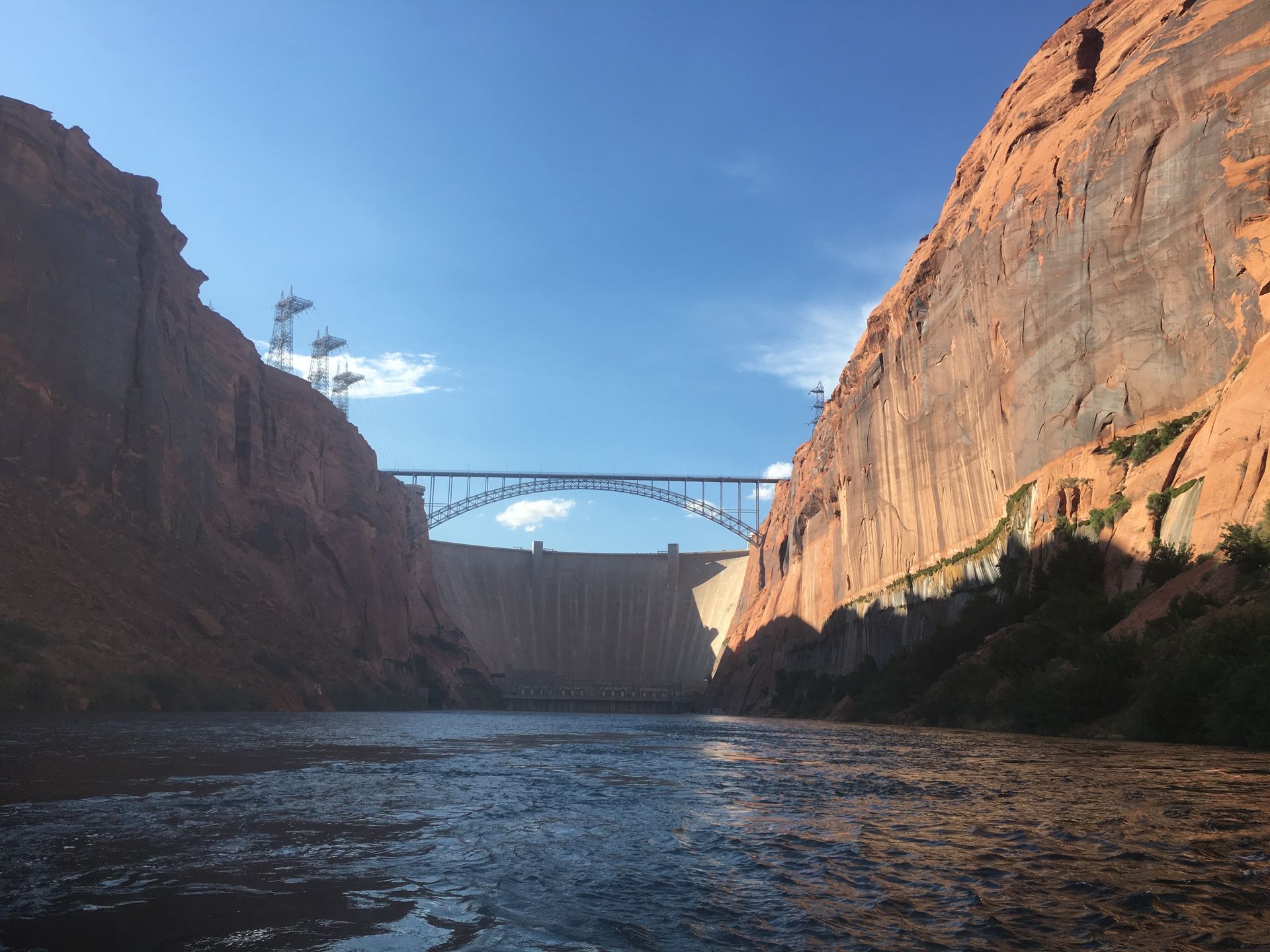
The Colorado River below Glen Canyon Dam flows through the lower reaches of Glen Canyon on its way to Lees Ferry, forming one of the most studied and discussed stretches of river in the American Southwest. Released from the base of the dam, the water is typically clear and tightly controlled. In recent years, however, lower water levels in Lake Powell have caused releases to come from shallower depths, warming the river compared to past decades and changing the conditions downstream.
This reach is calm and approachable, making it a popular destination for kayaking, rafting, fishing, and flatwater exploration. Visitors often take time to linger along the banks, explore side canyons, and pull over at small beaches and alcoves—experiencing the river at an unhurried pace that encourages observation and learning.
Quick facts about this stretch of river naturally help frame why it matters:
- Distance: Approximately 15 river miles
- Flow type: Fully controlled releases from Glen Canyon Dam
- Water temperature: Historically cold; increasingly variable and warmer in low Lake Powell years
- Sediment load: Extremely low compared to pre-dam conditions
- Major landmark: Horseshoe Bend
- Significance: Official start of all Grand Canyon rafting trips at Lees Ferry
The stretch between Glen Canyon Dam and Lees Ferry is heavily studied because it clearly shows the downstream effects of the dam. Before the dam was built, the Colorado River carried enormous amounts of sediment—historically millions of tons per year—giving the river its characteristic color and continuously rebuilding sandbars and beaches. Today, almost no sediment enters this reach. The clear water released from the dam has altered channel shape, vegetation patterns, and habitat structure, changes that continue downstream into the Grand Canyon where the long-term loss of beaches remains one of the most visible and actively managed challenges.
This reach is also closely studied for its ecological dynamics, particularly fish populations. Warmer water temperatures in recent years have allowed non-native fish species to survive passage through the dam’s turbines and thrive downstream. These species often compete aggressively—and successfully—with native Colorado River fish that evolved under very different conditions. The area has become a living laboratory for understanding how temperature, flow, and species interactions respond to large-scale river regulation.
One of the most recognizable features along this stretch is Horseshoe Bend, where the Colorado River makes a sweeping 270-degree turn around a towering sandstone fin. From the rim, it is one of the most photographed viewpoints in the Southwest. From the river, the bend feels enclosed and powerful, with sheer canyon walls rising directly from the water and the slow current tracing the river’s graceful arc.
As the river approaches Lees Ferry, its character begins to shift. Lees Ferry is where our Grand Canyon rafting trips officially begin and has long been a natural crossing of the Colorado River. In the late 1800s, it became the only reliable crossing for hundreds of miles and was named after John D. Lee, who began operating the ferry in 1873. The ferry remained in use until 1928, when it was replaced by the opening of the Navajo Bridge in 1929, permanently ending river crossings at this site.
Long before modern dams or ferries, Indigenous peoples lived, traveled, and traded along this stretch of the Colorado River. Petroglyphs and archaeological sites found along the canyon walls reflect thousands of years of human connection to the river. Many of these sites remain culturally significant today, and visitors are encouraged to view them respectfully and leave them undisturbed.
Today, the Colorado River from Glen Canyon Dam to Lees Ferry represents a rare convergence of recreation, science, and history. It is a place where visitors can quietly explore by boat, researchers can study the long-term effects of river regulation, and Grand Canyon journeys begin—carrying both people and questions downstream into one of the world’s most iconic landscapes.
More About the Horseshoe Bend Section of the Colorado River