
October 12, 2026
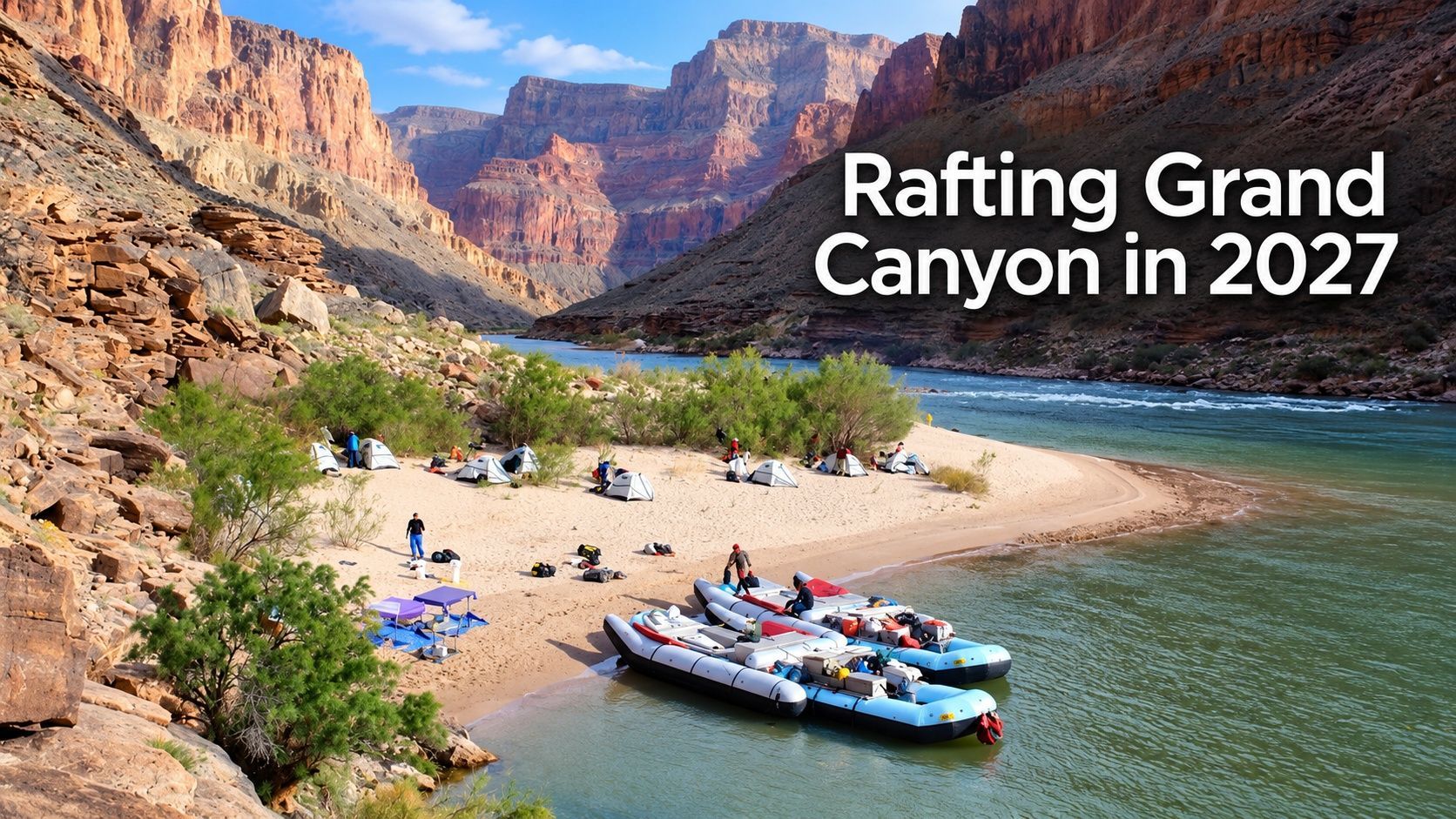
Grand Canyon Rafting in 2027: What You Should Know After the 2026 Season.
The story beyond the headlines - a river guide's perspective
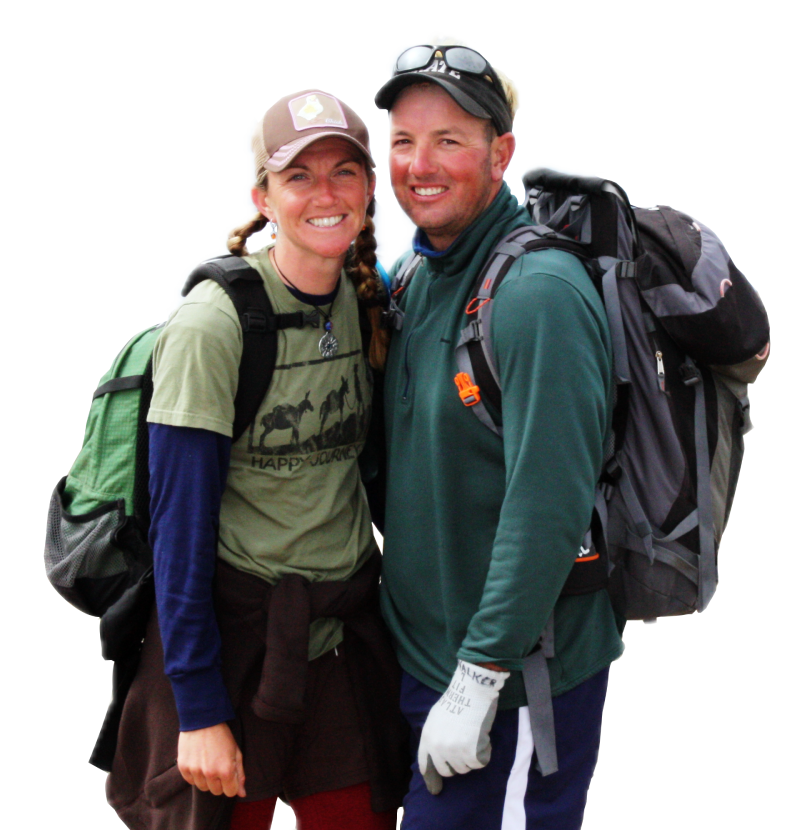
By Walker Mackay - Colorado River & Trail Expeditions

If you've followed the news about the Grand Canyon lately, you might wonder whether rafting the Colorado River is still a good idea.
Drought. Low water levels. Mystery illnesses. Flash floods. Accidents. Park closures.
It seems like every few months there's another alarming headline about one of America's most extraordinary places.
A Guide's Perspective
I've been guiding rafting trips through the Grand Canyon since 1995, and my first trip down the Colorado River was in 1985. Our family has been taking people through the Grand Canyon since 1971. Over those years, I've witnessed droughts, floods, changing river conditions, and countless other challenges.
The Grand Canyon has always been a wild and dynamic place. That's part of what makes it so remarkable.
The recent news stories involve real events, and many deserve serious attention. But I worry that the constant focus on problems is overshadowing the incredible experiences people continue to have in the Grand Canyon.
The towering canyon walls, thrilling whitewater, spectacular campsites, remarkable side hikes, and friendships formed along the river haven't disappeared.
In fact, despite the challenging headlines, we had a wonderful 2026 rafting season at Colorado River & Trail Expeditions (CRATE).
I'd like to share some perspective on what we've been hearing in the news, what we actually experienced on the river this year, and why I believe a Grand Canyon rafting trip remains one of the greatest adventures in the world.
What Was Grand Canyon Rafting Really Like in 2026?
Despite the headlines about drought and declining water levels, we had a wonderful 2026 rafting season in the Grand Canyon.
Yes, the Colorado River was running lower than we've experienced in many previous years. But there was still plenty of water to navigate the river and enjoy its incredible whitewater.
Lower flows exposed more rocks and made some rapids more technical, requiring our guides to navigate carefully. Our guides did an outstanding job, and we experienced no major problems associated with the lower water.

One of the highlights of the season was the camping. We enjoyed spectacular campsites along the river, and the lower water created some wonderful opportunities to enjoy the canyon's beaches.
Most importantly, we had great trips and happy guests.
I personally guided three Grand Canyon trips in 2026, and what stands out to me isn't the low water or the challenges reported in the news. It's the beautiful campsites, the excitement of the rapids, the remarkable scenery, and the people who shared those experiences.
Those are the stories that rarely make the headlines. Yet for the people who experience the Grand Canyon by raft, they're often the stories that matter most.
Will There Be Enough Water for Grand Canyon Rafting in 2027?
One of the biggest concerns we've heard from prospective guests is whether there will be enough water in the Colorado River to continue rafting through the Grand Canyon.
There's no question that the Colorado River Basin is facing serious water challenges. The winter of 2025–2026 produced exceptionally poor snowpack and runoff conditions, and prolonged drought and climate change are affecting the river system.
But there's an important distinction between declining water levels in Lake Powell and the amount of water flowing through the Grand Canyon.
The Colorado River through Grand Canyon National Park is regulated by releases from Glen Canyon Dam. Even when Lake Powell is low, water continues flowing downstream as long as the reservoir stays above "dead pool." “Dead pool” is the level in Lake Powell—about 3,370 feet above sea level—below which Glen Canyon Dam can no longer release water downstream by gravity. The dam can’t generate hydropower at a higher level, around 3,490 feet, so power generation would stop before the reservoir reached dead pool.
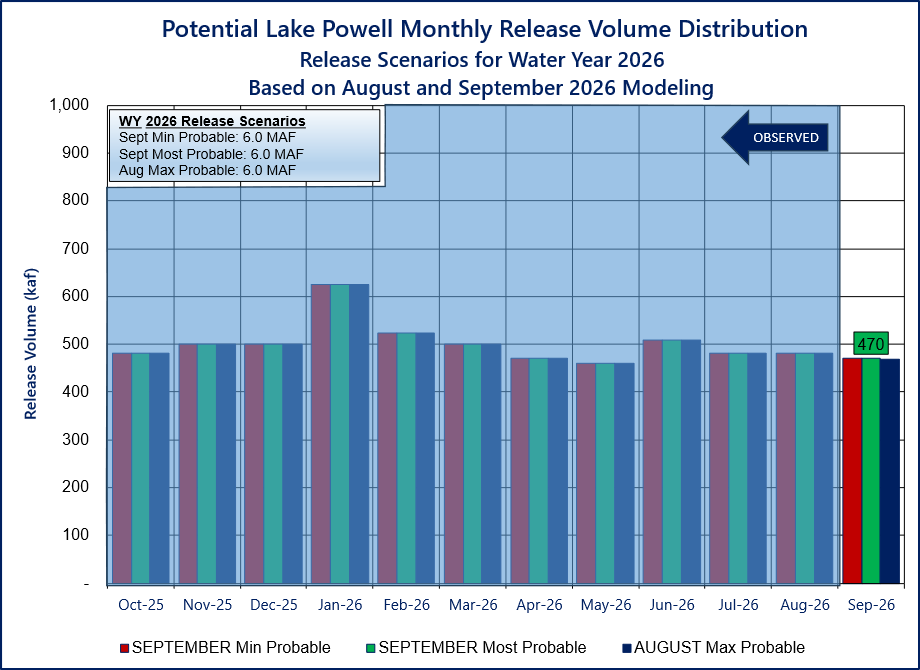
During the 2026 water year, approximately 6 million acre-feet of water was scheduled for release from Glen Canyon Dam. Although this was less water than we've been accustomed to in many previous years, it was still plenty for us to navigate the Colorado River and enjoy an excellent rafting season.
Video of Horn Creek Rapid May 19, 2026. The flow of the Colorado River in the video is about 8000 Cubic Feet per Second.
Water Year 2026 Releases

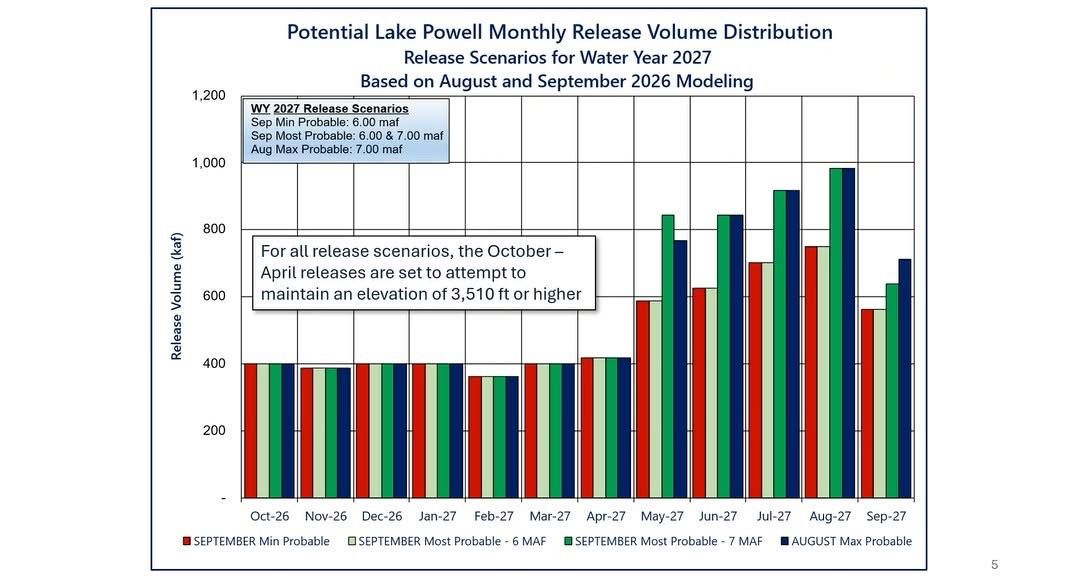
Predicted Water Year 2027 Releases
Glen Canyon Dam Adaptive Management Program Technical Work Group-September 2026

Looking ahead to 2027, the Bureau of Reclamation's Glen Canyon Dam operating information webpage provides updates on reservoir conditions and planned releases. The amount of water released during 2027 will depend on snowpack, runoff, reservoir elevations, and water-management decisions. The minimum probable release is set at 6 maf, which is what was released in water year 2026. This resulted in plenty of water to raft the Grand Canyon on in 2026. According to the Bureau of Reclamation website:
"Lake Powell will begin the October 1 water year between elevations 3,540 and 3,510 feet, placing operations in the Lower Elevation Infrastructure Protection Range with an expected water year release between 6.0 and 7.0 million acre-feet. Reclamation will begin the water year with lower releases between 6.0 and 7.0 million acre-feet in order to attempt to maintain an elevation of 3,510 feet or higher and will adjust releases through April to continue to maintain elevation 3,510 feet. The water year 2027 release volume will be determined in April."
We're certainly hoping for a big snowpack and a long, cold winter throughout the Colorado River Basin.
At the same time, we recognize that the long-term challenges facing the Colorado River are real. Climate change, declining runoff, and increasing demands on a limited water supply will require significant changes in how water is used throughout the West.
These are serious issues that deserve our attention. But they shouldn't be confused with the idea that there is no longer enough water to enjoy a Grand Canyon rafting trip.
After navigating the river throughout the exceptionally dry 2026 season, we're looking forward to another great year on the Colorado River in 2027.
What About the Mystery Illness Reported in the Grand Canyon?
During the spring and summer of 2026, reports surfaced of an unexplained illness affecting some people who had rafted through the Grand Canyon. Some experienced serious symptoms, and federal officials began investigating the cause.
The investigation received news coverage in July, after people from several rafting groups reported similar symptoms. The first reported cases were associated with trips that launched in May, but reports also included trips in June. News accounts cited an unofficial estimate of roughly 18 to 24 people who had experienced similar flu-like symptoms. No cause was confirmed, and the public information does not link the illness to a specific trip or exposure. We hope the National Park Service will continue to research the illness and give us further direction.
We didn’t hear much about the illness until after our May trips had already been completed.
We ran many trips in May, June, and July, and none of our guides or guests came down with the illness.
KNAU the local affiliate for NPR in Flagstaff, Arizona did a story about the illness.
With so little information available, we honestly didn’t know what to think. We followed the investigation throughout the summer, hoping researchers would identify a cause. We sympathize with those who became ill, and we believe it’s important to understand what happened.
As the summer went on, we heard less about new reports of similar illnesses. Questions remained, but the situation did not affect our ability to operate trips.
Some prospective guests have asked what this might mean for 2027. Based on our experience throughout the 2026 season, we aren’t overly concerned about the illness in the upcoming season. We’ll continue to follow any new findings or recommendations from health officials.
At CRATE, we take health and sanitation seriously. We carry most of our drinking water and can filter additional water when needed. Handwashing is part of our daily routine, and we require everyone to wash their hands before meals and after using the bathroom. Our guides are also certified food handlers.
Our guides are trained in wilderness medicine and are Wilderness First Responders. No amount of preparation can eliminate every risk of wilderness travel, but we work hard to prevent problems and prepare our guides to respond when they occur.
The Grand Canyon is a remote wilderness, and spending time outdoors carries health risks. It’s important to distinguish reports of illness among people on certain trips from what we experienced throughout our own season.
Flash Floods, Wild Fires, and a Changing Grand Canyon
Flash floods have always been part of the Grand Canyon ecosystem. In more than 30 years of guiding trips through the canyon, I've witnessed countless floods and seen first hand how they continually reshape the landscape and the rapids in Grand Canyon.
The Dragon Bravo Fire in 2025 burned large portions of the North Rim, leaving behind extensive burn scars. When heavy rains fall on burned watersheds, the loss of vegetation and changes to the soil can increase runoff, carrying mud, rocks, and debris into side canyons and eventually the Colorado River.
On September 13, 2026 Abel Nelson Captured this Beautiful Scene of a Grand Canyon Flash Flood.
During the summer of 2026, we saw side canyons flash flood, turning the Colorado River a muddy gray color. Sediment-laden runoff like this can be especially noticeable following fires, although not every muddy flood comes from a burned area.
One of the most significant events of the summer occurred in Bright Angel Creek near Phantom Ranch on August 29. The flash flood caused extensive damage to buildings and infrastructure, including the water pipeline, and tragically resulted in three hiker fatalities.
None of the rafting trips on the Colorado River experienced major negative consequences from the flood. The river was already fluctuating by approximately 4,000 CFS due to releases from Glen Canyon Dam. The peak flow from Bright Angel Creek was substantial, with estimates around 10,000 CFS. As the floodwater continued downstream, it spread out and its effects diminished.
The flood carried trash, driftwood, and other debris into the Colorado River. As the water receded, some beaches were left covered with debris, sand, and mud.
Flash floods can also dramatically change the rapids themselves. When side canyons flood, they can carry enormous amounts of rock, gravel, and sediment into the Colorado River, creating new rapids or altering existing ones.
This happened at Bright Angel Creek, where debris washed into the Colorado River and transformed what had been a relatively small riffle into a much more substantial rapid. While the new rapid isn't particularly large compared to many of the Grand Canyon's famous rapids, it is significantly bigger than it was before the flood.
Upstream from the rapid, water backed up onto the Colorado River gauge and made it look like the Colorado River was flowing over 20,000 CFS. The backed up water inundated the kitchen area of the camp at Cremation and backed up the rivers flow into 86 mile rapid. Partially washing the rapid out.
Changes like this are nothing new in the Grand Canyon. Over my years of guiding, I've watched rapids form, change, and sometimes nearly disappear as the river continually reshapes itself.
I witnessed this firsthand at River Mile 220 in the mid-2010s. I was fortunate enough to be one of the first guides to run the rapid after a large debris flow dramatically changed its character. What had previously been a relatively small, rocky rapid suddenly became a much more substantial rapid with a significant drop. Over the years, the Colorado River has gradually moved and redistributed the debris, and the rapid has more or less returned to its original character.
Perhaps the most famous example is Crystal Rapid. In 1966, a massive flash flood down Crystal Creek deposited an enormous amount of debris into the Colorado River, transforming Crystal from a relatively modest rapid into one of the biggest and most challenging rapids in the Grand Canyon. Nearly 60 years later, Crystal remains one of the canyon's most significant rapids.
These changes are part of what makes the Grand Canyon such a fascinating place to run rivers. The Colorado River is constantly changing, and even after decades of guiding, there is always something new to see and learn.
How Experienced River Guides Adapt to Changing Conditions
People sometimes ask how our guides deal with changing river conditions, including flash floods and newly formed rapids.
I think it comes down to four things: training, practice, experience, and judgment.
When guides first start working for us, they learn from more experienced boatmen.
Over time, they practice those skills on the river and develop the experience needed to make good decisions.
The more situations they've encountered, the better equipped they are to recognize changing conditions and respond appropriately.
Sometimes the best decision still isn't a great option.
Our trip leaders are trained in river rescue, and some of our most experienced guides have been working on the river for more than 30 years.
That experience is one of the things I'm most proud of at CRATE.
The Grand Canyon is constantly changing, and good judgment comes from spending time on the river, learning from others, and understanding the environment you're traveling through.
We expect our 2027 Grand Canyon rafting trips to be fabulous as always, and our goal is the same as it's always been: to show our guests the very best of the Grand Canyon.
When changes happen. We adapt.
Why I Recommend a Grand Canyon Rafting Trip in 2027
I've been rafting the Grand Canyon for more than 40 years, and one thing I've learned is that the experience has always been life-changing.
Over the years, I've taken people down the river who have traveled all over the world. They've visited incredible places and experienced all kinds of adventures. Yet at the end of a Grand Canyon rafting trip, I regularly hear them say it was the best thing they've ever done.
I don't think that's an exaggeration. I've heard it too many times over too many years.
Of course, the river and the rapids are a big part of the adventure. There's nothing quite like running the Colorado River through the heart of the Grand Canyon.
But I think what makes the experience truly special goes beyond the whitewater.
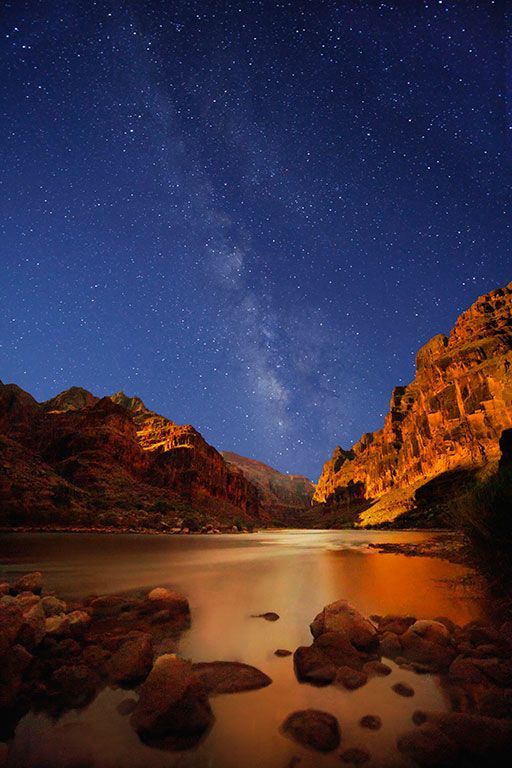
It's about being in the Grand Canyon itself. Spending days surrounded by incredible scenery, sleeping beneath the stars, exploring side canyons, and sharing the experience with family, friends, and the people you meet along the way.
"One of the best things about a river trip is it brings people together. You make new friends and create deeper bonds with each other. Everyone is an equal and shares in the success of the trip."
It's about stepping away from the distractions of everyday life and spending meaningful time with people you care about.
After more than 40 years of rafting the Grand Canyon, I still look forward to every trip.
In fact, I'm hoping to put together a Grand Canyon rafting trip in 2027 with some of our closest friends and their children. I can't think of a better way to spend time together.
The river changes. Water levels rise and fall. Flash floods reshape side canyons. There will always be challenges and occasionally troubling headlines.
But the experience of being there, traveling down the Colorado River through one of the most extraordinary landscapes on Earth, remains as remarkable as ever.
For me, it's never been just about the rapids. It's about being in that incredible place and sharing the experience with people you care about.
That's why I keep going back.
And that's the Grand Canyon story I wish more people were hearing.
Thinking About a Grand Canyon Rafting Trip in 2027?
If you've been considering a Grand Canyon rafting trip but have questions about river conditions, water levels, or what to expect, we'd be happy to talk with you.
Our family has been guiding trips through the Grand Canyon since 1971, and we love sharing this remarkable place with others.
Explore CRATE's Grand Canyon rafting trips or call us at 1-800-253-7328.
About the Author
Walker Mackay is a longtime Grand Canyon river guide with Colorado River & Trail Expeditions (CRATE), a family-owned rafting outfitter founded by his parents, David and Vicki Mackay, in 1971.
Walker first rafted the Grand Canyon in 1985 and began guiding professionally in 1995. Over the past three decades, he has guided trips through the Grand Canyon and other rivers throughout the American West and Alaska.
He continues to spend time on the Colorado River each season and enjoys sharing the Grand Canyon's geology, history, whitewater, and extraordinary landscapes with guests.