How Big is the Grand Canyon?

The Grand Canyon is massive. It was formed over millions of years by geologic processes including deposition, uplift, downcutting, and erosion. Today the Grand Canyon covers 1902 square miles in area. The state of Rhode Island is only 1212 square miles in size.


The Colorado River flows 277 miles through Grand Canyon from Lees Ferry to the Grand Wash cliffs. John Wesley Powell took the first river trip through the Grand Canyon in 1869. Today over 20,000 people travel by boat through the Grand Canyon each year. In comparison, approximately 6,000,000 people visit the Grand Canyon each year.


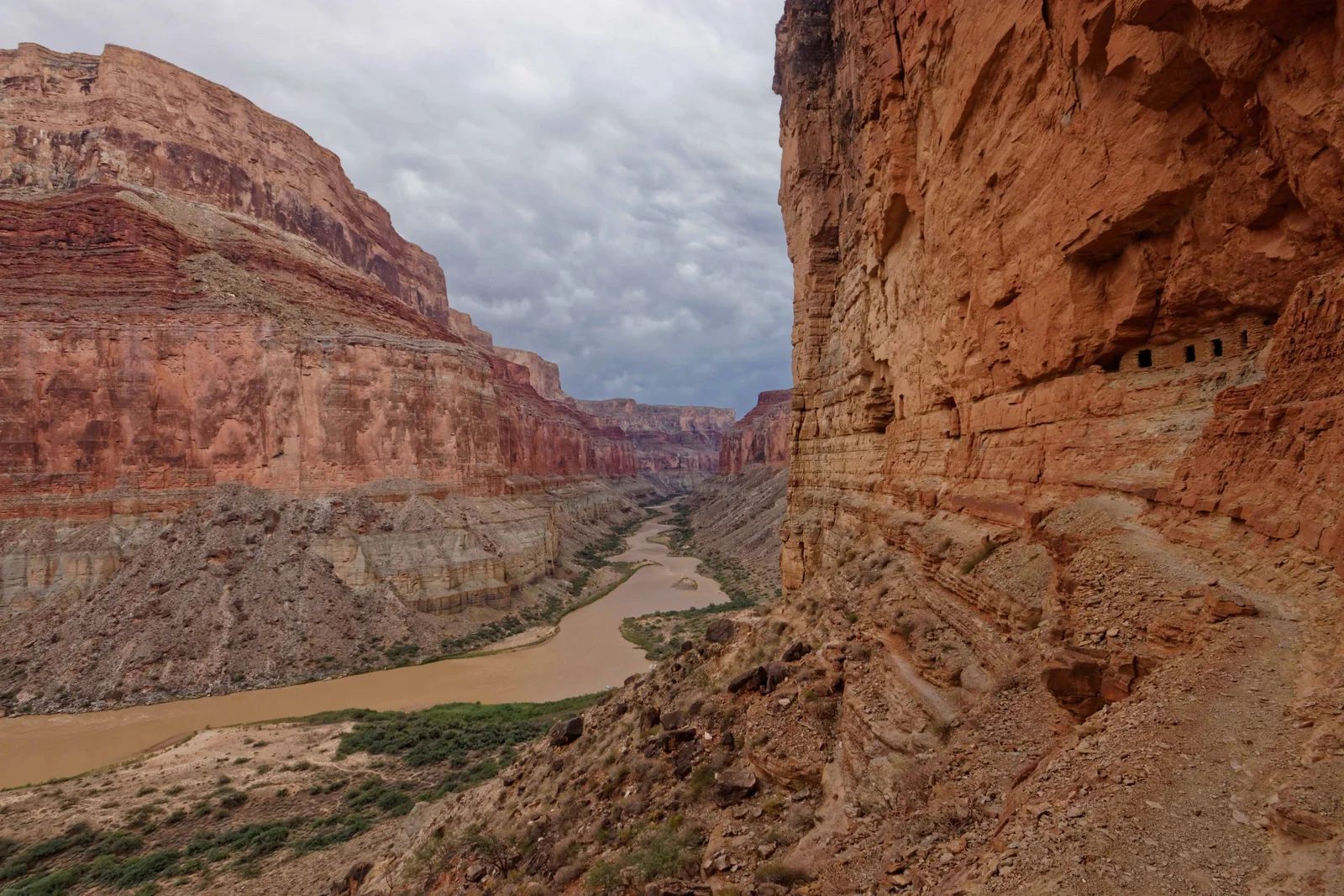
The Grand Canyon is over a mile deep. A mile high is 5280 feet which is about 145 of our Grand Canyon motorized rafts stacked end to end or 293 of our oar boats put end to end. As the Condor flies it is 10 miles across from the North Rim Village to the South Rim Village. It is a 21 mile hike across the canyon via the North Kaibab and South Kaibab trail system or 23.5 miles via the North Kaibab and Bright Angel Trail.


To fill the Grand Canyon it would take 1,100,758,441,558,442 gallons of water which is 5.45 trillion cubic yards. This is approximately the same volume as Haley’s Comet and 1,500,000 times bigger than the Great Pyramid of Giza.

More About the How Big is the Grand Canyon?

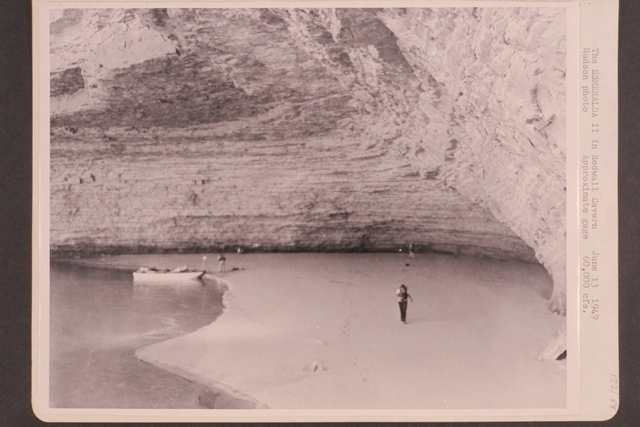
Sandy beach inside a cavern overlooks a river, with red rock canyon walls and a blue sky.
February 15, 2026
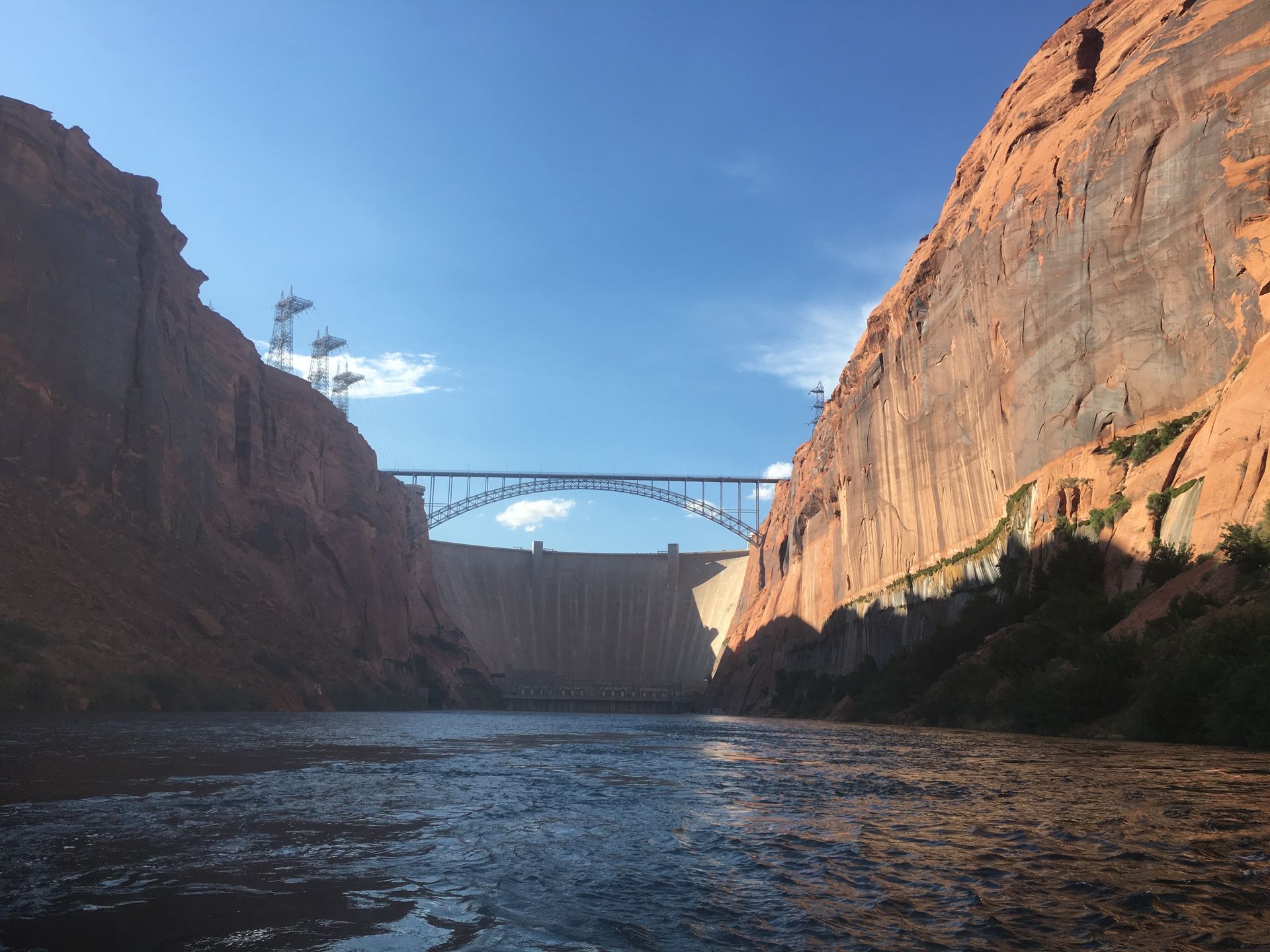
The Colorado River below Glen Canyon Dam flows through the lower reaches of Glen Canyon on its way to Lees Ferry , forming one of the most studied and discussed stretches of river in the American Southwest. Released from the base of the dam, the water is typically clear and tightly controlled. In recent years, however, lower water levels in Lake Powell have caused releases to come from shallower depths, warming the river compared to past decades and changing the conditions downstream. This reach is calm and approachable, making it a popular destination for kayaking, rafting, fishing, and flatwater exploration. Visitors often take time to linger along the banks, explore side canyons, and pull over at small beaches and alcoves—experiencing the river at an unhurried pace that encourages observation and learning.  Quick facts about this stretch of river naturally help frame why it matters:
Glen Canyon Dam with bridge and canyon walls under a blue sky. Water flows towards the dam.
February 12, 2026
The Dirty Devil River joins the Colorado River at River Mile 169.5. John Wesley Powell camped at this confluence on July 28, 1869, describing the tributary as extremely muddy and foul-smelling. Jack Sumner later named it the Dirty Devil. The Dirty Devil is formed by the confluence of Muddy Creek and the Fremont River near present-day Hanksville, Utah. The Fremont River originates at Fish Lake and flows along the Waterpocket Fold through Capitol Reef National Park. Muddy Creek drains the San Rafael Swell. Historic Context — Powell’s Expeditions: Powell’s 1869 expedition recorded the Dirty Devil as both a geographic reference and a warning. In his later expeditions of 1871–72, Powell returned with improved boats and a scientific mandate. Tributaries such as the Dirty Devil became fixed reference points for mapping and geologic observation. Powell’s journals note the heavy silt load and poor water quality here, and his party avoided using the Dirty Devil as a water source when possible.
Camping gear on a sandy beach near a red rock wall and river under a cloudy sky.
February 12, 2026
Camping and Dining